Loading...
Loading...
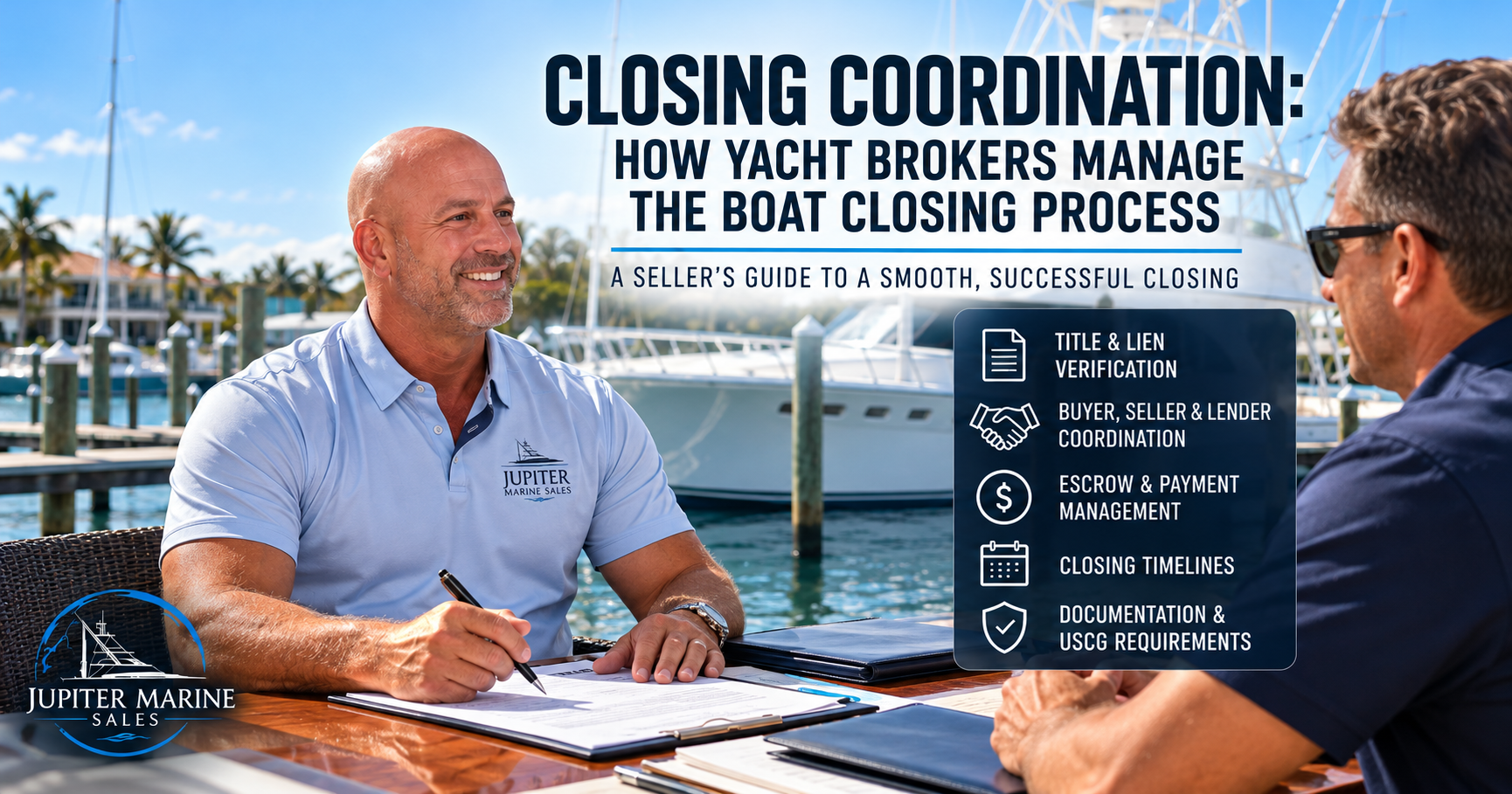
Closing Coordination: How Yacht Brokers Manage the Boat Closing Process. Darren Diaz, Founder of Jupiter Marine Sales, guides buyers and sellers through title verification, escrow management, vessel documentation, and final closing procedures to ensure a smooth and successful boat sale
Jupiter Marine Sales | Professional Boat Selling Strategy — Article #13
A successful sea trial and survey are major milestones in selling a boat, but they do not mean the transaction is complete. Between a buyer's final acceptance and the actual closing, several important steps must be coordinated to ensure the vessel changes ownership properly, the seller receives payment, and all contractual obligations are satisfied.
This is where an experienced yacht broker becomes especially valuable.
At Jupiter Marine Sales, we understand that closing a boat sale involves much more than exchanging money for keys. It requires communication between buyers, sellers, lenders, title companies, documentation specialists, and sometimes multiple financial institutions.
Our responsibility is to keep the transaction organized, identify potential complications before they become problems, and help both parties reach a successful closing.
Whether you're selling a 25-foot center console or a multimillion-dollar yacht, professional closing coordination can make the difference between a smooth transaction and an unnecessarily complicated one.
Once the buyer completes the survey and sea trial and provides the required acceptance under the purchase agreement, the transaction moves into its final stages.
If you're following our Professional Boat Selling Strategy series, our previous article, Sea Trial Preparation: How Yacht Brokers Prepare Sellers for a Successful Sea Trial, explains how proper preparation helps buyers evaluate a vessel and move confidently toward acceptance.
After acceptance, the broker begins coordinating the remaining closing requirements.
These commonly include:
Every transaction is different. A straightforward cash purchase involving a Florida-titled vessel may close relatively quickly, while a financed transaction involving a federally documented yacht can require additional coordination.
The objective is to establish a clear closing schedule and ensure that everyone understands their responsibilities.
One of the most common causes of frustration during a boat sale is an unrealistic closing date.
An experienced yacht broker understands that several outside parties may influence when a transaction can be completed.
At Jupiter Marine Sales, we've successfully coordinated cash transactions that closed in as little as three days. However, those situations typically involve well-prepared buyers, readily available documentation, and minimal complications.
For many transactions, a closing period of approximately 30 days from the executed purchase agreement is a reasonable planning target.
Factors affecting the timeline include:
Cash Purchases
Cash transactions can sometimes close within approximately one week after all acceptance and documentation requirements are satisfied.
Financed Purchases
Marine financing may require an additional 10–12 business days or longer, depending on underwriting, insurance, surveys, and lender requirements.
Existing Vessel Loans
Obtaining an accurate loan payoff statement may take approximately 48–72 hours, depending on the financial institution.
Title and Documentation Requirements
State title transfers, USCG documentation, lien releases, and other ownership records can introduce additional requirements.
Survey Scheduling
Before closing coordination even begins, surveyor availability can affect the overall transaction timeline. In busy boating markets, survey appointments may need to be scheduled two or more weeks in advance.
A knowledgeable broker considers these factors early rather than waiting until the scheduled closing date.
A boat closing often involves more participants than buyers and sellers initially realize.
Depending on the transaction, the parties may include:
Each participant may have specific requirements or deadlines.
For example, a lender may require proof of insurance before releasing funds, while a documentation company may need signed ownership documents and an accurate payoff statement before preparing the closing package.
The yacht broker helps keep these requirements organized and ensures that important information reaches the appropriate parties.
At Jupiter Marine Sales, communication is a major part of our closing process. We work to ensure buyers and sellers understand what is required, when documents must be signed, and what remains outstanding before closing.
A successful closing should never depend on everyone scrambling to complete paperwork at the last minute.
In many yacht transactions, the buyer submits an earnest money deposit after executing the purchase and sale agreement.
A common deposit amount is approximately 10% of the agreed purchase price, although the actual amount depends on the contract.
The deposit is generally held by the designated escrow holder until the transaction is completed or the funds are otherwise disbursed according to the purchase agreement.
It is important to understand that escrow deposits are not automatically available to cover surveys, repairs, or other due diligence expenses.
The purchase agreement determines how the deposit is handled.
For example, if the buyer properly rejects the vessel within the applicable contractual inspection or acceptance deadline, the deposit may be fully refundable under the agreement.
Once the buyer accepts the vessel and contractual contingencies are satisfied or waived, the parties proceed toward closing under the agreement's remaining terms.
At closing, the buyer typically provides the remaining purchase funds through an approved payment method, often a wire transfer.
Before releasing the vessel, the parties should verify that the required funds have been received and that the closing agent or escrow holder has authorized completion of the transaction.
Important: Wire fraud is a serious concern in high-value transactions. Buyers and sellers should independently verify payment instructions through a trusted telephone number before transferring funds.
One of the most important steps in coordinating a boat closing is confirming that the seller has the legal authority to transfer the vessel and identifying any outstanding financial obligations.
A vessel may be:
These circumstances can affect the closing documents and transfer procedures.
For example, a seller with an outstanding marine loan may need to arrange for the loan balance to be paid directly from closing proceeds.
The lienholder must then provide the appropriate release or satisfaction documentation.
For federally documented vessels, recorded mortgages and other encumbrances may require additional attention.
Professional marine title and documentation companies can assist with researching ownership records, preparing transfer documents, coordinating lien releases, and submitting required filings.
At Jupiter Marine Sales, we strongly encourage buyers and sellers to use qualified marine title and documentation professionals.
A broker can help coordinate these services, but the appropriate title, documentation, and legal professionals should handle matters requiring their specialized expertise.
Not every vessel follows the same ownership transfer process.
In Florida, many recreational boats are titled and registered through the state.
Other vessels are federally documented through the United States Coast Guard.
A Florida-titled vessel generally requires properly completed title transfer documents and applicable registration procedures.
A USCG-documented vessel may require a bill of sale, documentation transfer filings, mortgage satisfaction documents, and other paperwork depending on the transaction.
Some buyers may elect to discontinue federal documentation and obtain state title or registration instead, when legally permitted.
These decisions should be addressed before closing because documentation requirements can affect the transfer process.
The official resources include:
At Jupiter Marine Sales, our preferred approach is to involve an experienced marine title company to help ensure ownership transfers and documentation requirements are addressed correctly.
If a buyer elects to independently handle the title transfer or USCG documentation, that decision should be clearly documented in the closing paperwork, including the buyer's acknowledgment of their responsibility for completing the required filings.
The precise allocation of responsibilities remains subject to the purchase agreement and applicable law.
We'll explore these issues in greater detail in our next article, Documentation and Lien Handling: How Yacht Brokers Help Sellers Navigate Vessel Titles, Payoffs, and USCG Requirements.
A successful closing starts with preparing the seller well before the final documents are signed.
The seller should understand what is expected and which items must be completed before transferring possession.
Common preparations include:
Removing Personal Property
Unless specifically included in the purchase agreement, personal belongings should be removed from the vessel before delivery.
Organizing Vessel Documentation
The seller should gather available maintenance records, equipment manuals, warranty information, keys, access codes, and other items being transferred with the boat.
Confirming Loan Payoffs
If the vessel has an outstanding loan, the payoff amount and payment procedures should be confirmed.
Reviewing Closing Documents
The seller should review the bill of sale, closing statement, lien-related documents, and any other required paperwork for accuracy.
Coordinating Insurance
The seller should discuss the appropriate cancellation or adjustment date with their insurance provider. Coverage should not be terminated prematurely.
Arranging Final Delivery
The buyer and seller should agree on when and where the vessel will be delivered and when responsibility for the vessel transfers under the purchase agreement.
A professional yacht broker helps ensure these details are addressed before closing day.
Even transactions involving motivated buyers and sellers can experience delays.
Common causes include:
Many of these problems can be avoided through early preparation.
At Jupiter Marine Sales, we believe effective closing coordination begins long before the actual closing date.
By reviewing the transaction requirements early, maintaining communication, and following up on outstanding items, a broker can significantly reduce the likelihood of preventable delays.
However, no broker can guarantee that outside financial institutions, government agencies, or third-party service providers will complete their work within a specific timeframe.
The broker's role is to anticipate issues, communicate clearly, and help resolve complications efficiently.
One of the most important details in a vessel transaction is establishing exactly when the buyer is entitled to take possession.
Completing a sea trial does not transfer ownership.
Signing a purchase agreement does not, by itself, mean the buyer can take the boat.
Even signing closing documents may not be sufficient if the required funds have not been received or other contractual conditions remain outstanding.
The parties should coordinate delivery according to the purchase agreement and the closing agent's instructions.
Before the seller releases the vessel, the following should be confirmed:
The broker should also help coordinate the transfer of keys, manuals, equipment, and other agreed items.
Clear communication at this stage helps prevent disputes about possession, insurance, and responsibility for the vessel.
Boat sales involve significant financial transactions, legal documentation, and numerous details that must be handled correctly.
An experienced yacht broker brings organization, industry knowledge, and transaction management experience to the process.
Professional closing coordination helps sellers:
At Jupiter Marine Sales, we believe our responsibility extends beyond marketing a vessel, negotiating an offer, or coordinating a successful sea trial.
Our job is to help guide the transaction from the initial listing agreement through the final closing and delivery.
That commitment is an important part of the value of professional yacht brokerage representation.
Every boat sale is unique, but our approach remains consistent: preparation, communication, and attention to detail.
Our team combines professional yacht brokerage experience with practical knowledge of vessel operations, marine surveys, financing, and the Florida boating market.
We understand the importance of maintaining momentum after a buyer accepts a vessel while ensuring that essential closing requirements are not overlooked.
From coordinating lien payoffs and closing statements to helping buyers and sellers understand documentation requirements, we work to make the process as organized and efficient as possible.
With hundreds of boat transactions handled by our team, Jupiter Marine Sales understands that a successful closing is not simply about getting a deal under contract.
It's about getting the transaction across the finish line.
Selling a boat should not become a second job for the owner.
When you work with Jupiter Marine Sales, our experienced brokerage team helps coordinate the process from initial marketing through negotiation, survey, sea trial, closing, and delivery.
Whether you're selling a center console, sportfish, express cruiser, or luxury yacht, we're here to help you navigate the transaction with confidence.
Visit Jupiter Marine Sales to learn more about our professional yacht brokerage services.
Browse Our Featured Boats for Sale
Explore More Yacht Brokerage Guides
Written by Darren Diaz, Founder, Jupiter Marine Sales | Licensed Yacht Broker & 100-Ton Master Captain
Previous Article — #12: Sea Trial Preparation: How Yacht Brokers Prepare Sellers for a Successful Sea Trial
Next Article — #14: Documentation and Lien Handling: How Yacht Brokers Help Sellers Navigate Vessel Titles, Payoffs, and USCG Requirements
This article provides general educational information and does not constitute legal, tax, or title advice. Specific closing obligations are governed by the applicable purchase agreement and relevant law.
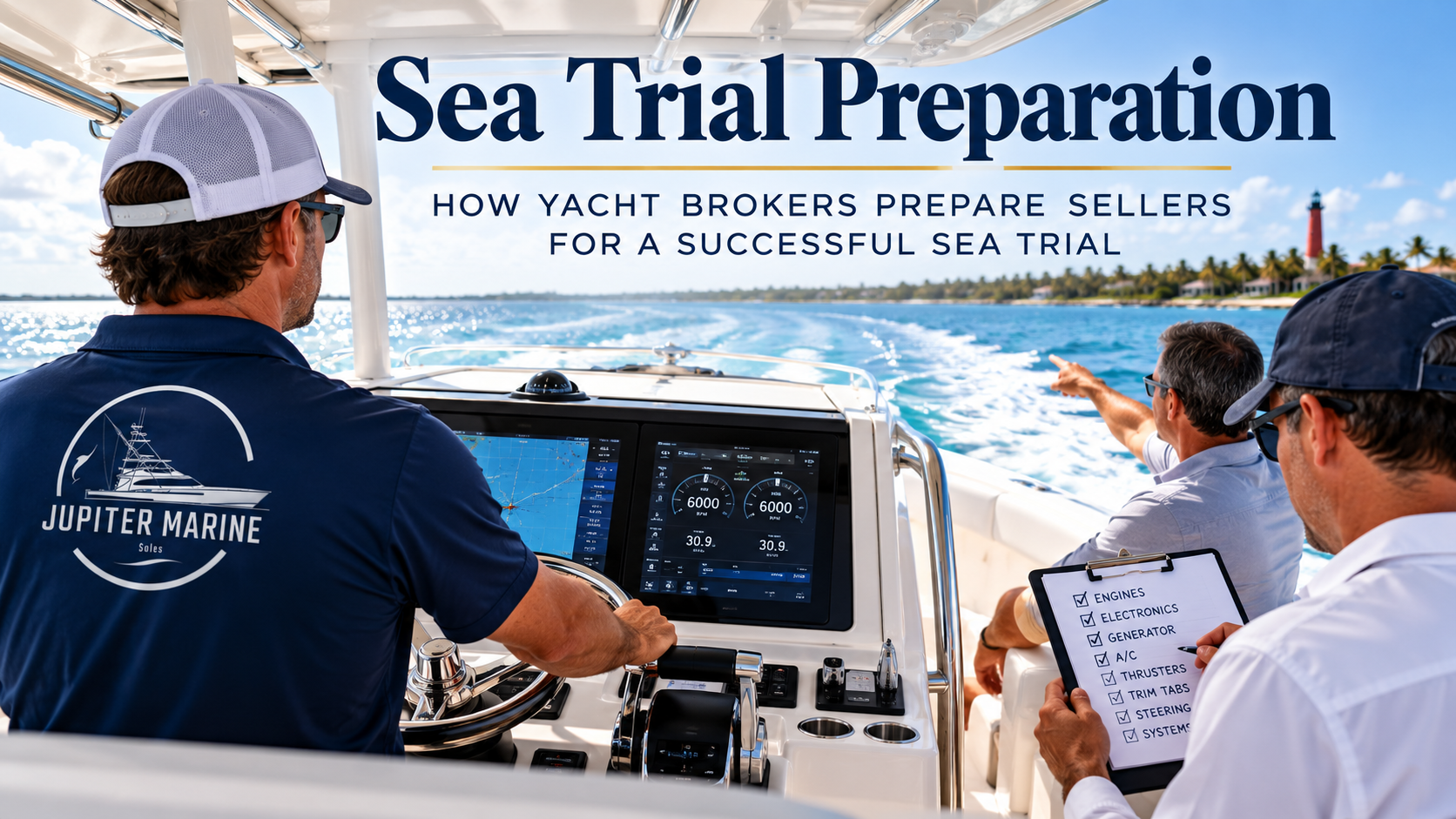
Getting a boat under contract is an important milestone in the selling process, but it is not the finish line.
After the seller accepts an offer and the purchase agreement is executed, the transaction typically moves into the buyer’s inspection and due-diligence period. For most brokerage t
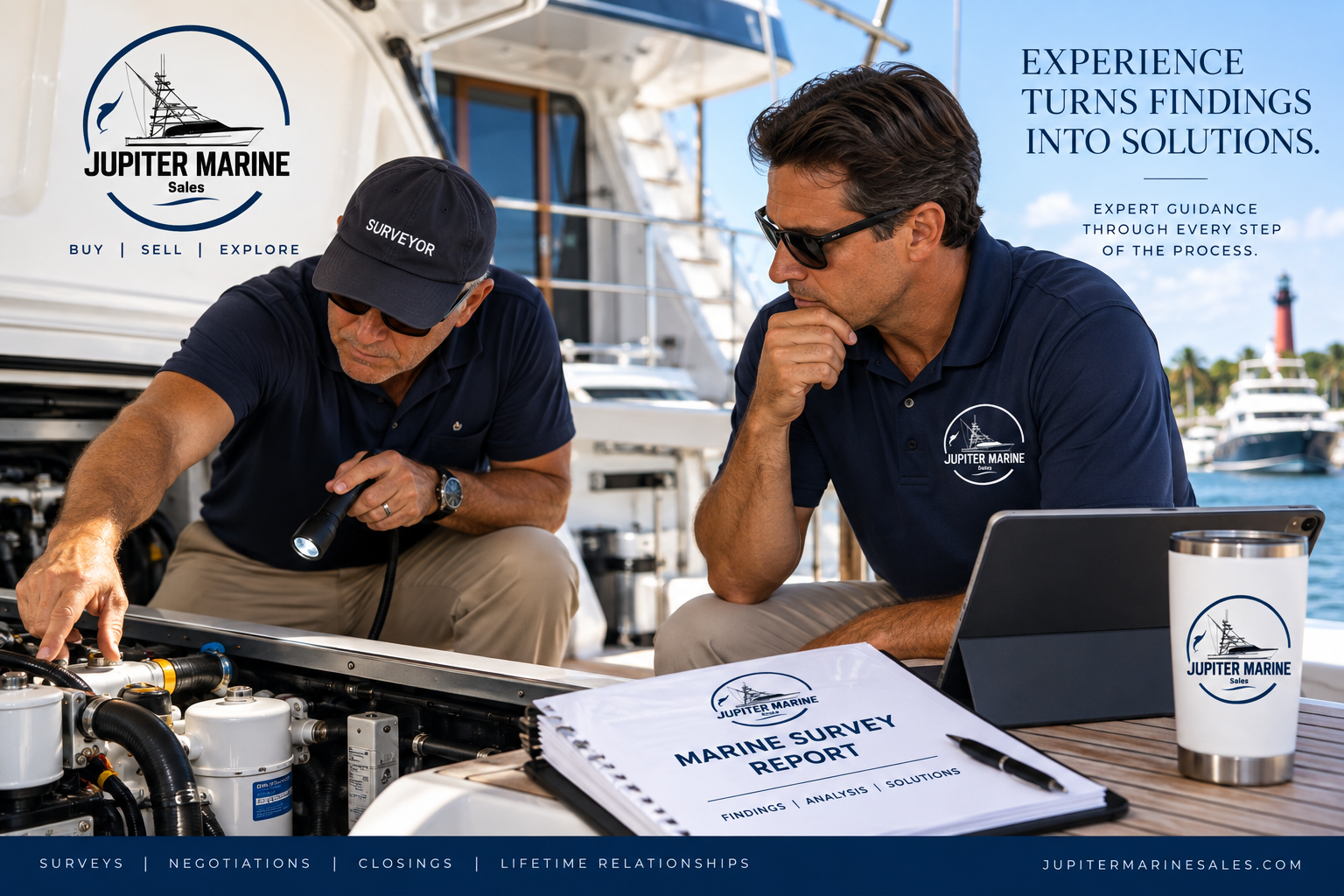
A marine survey is one of the most important stages of buying or selling a boat—but what happens after the survey can be just as important as the inspection itself.
Survey day is often where a straightforward boat transaction suddenly becomes complicated.
A surveyor m
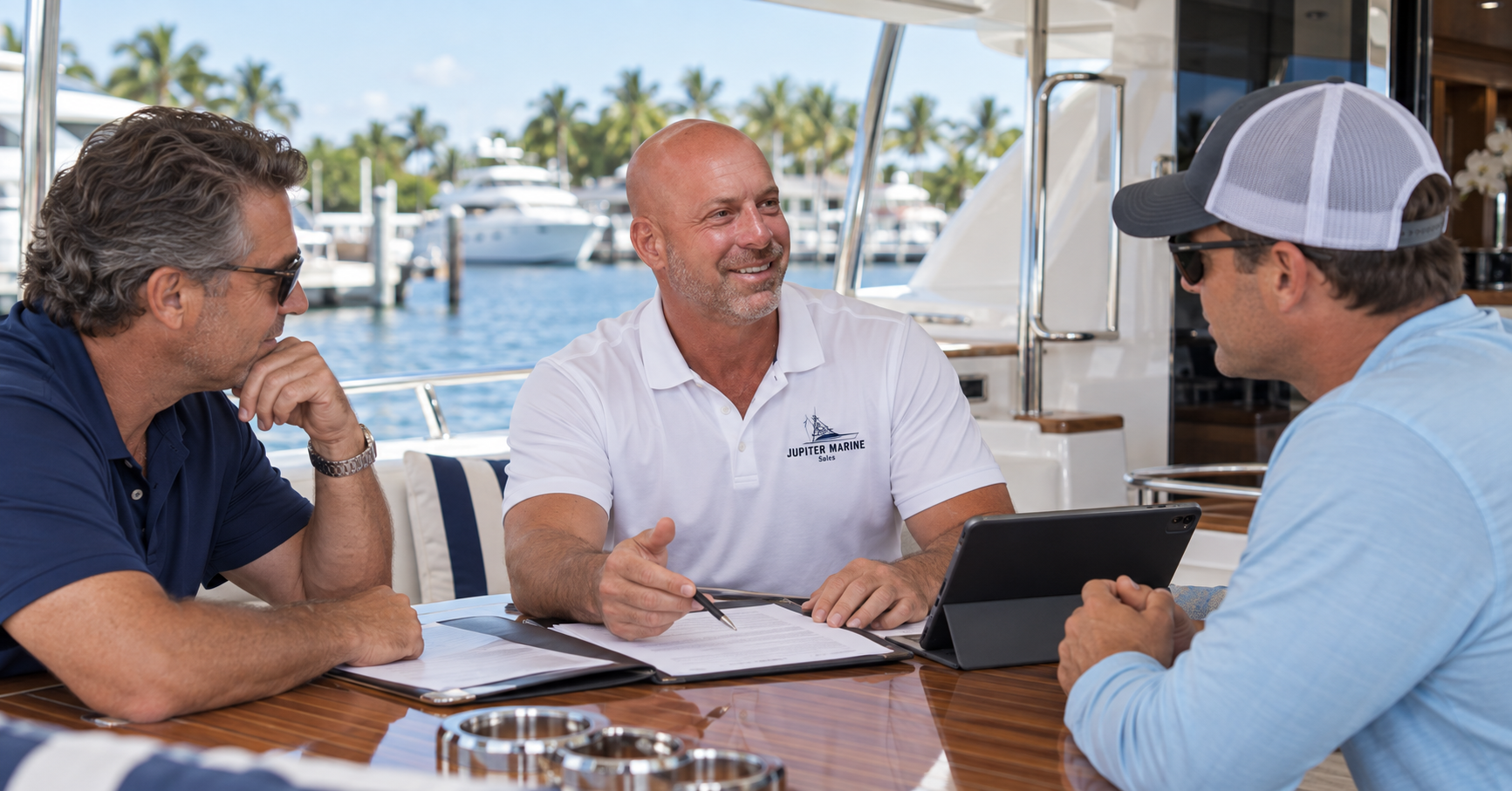
Receiving an offer is an important milestone in the sale of a boat or yacht—but it is not the end of the process.
It is the beginning of the negotiation.
The buyer may begin below the asking price. The seller may want to counter. The parties may disagree about the deposit, survey peri
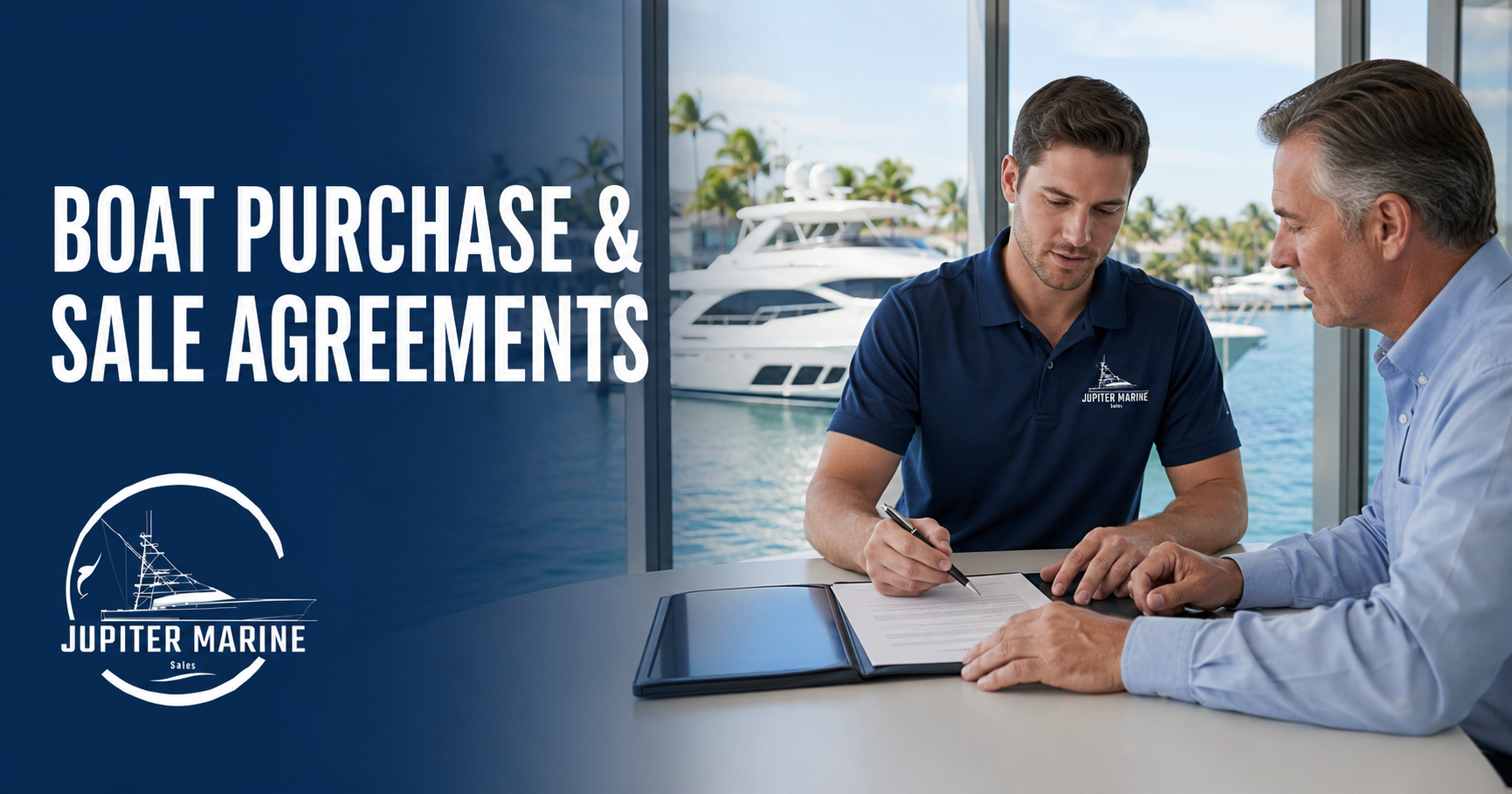
Reaching an agreement on price is an important milestone in the sale of a boat or yacht.
But agreeing on a number does not mean the transaction is complete—or even that the vessel is officially under contract.
The negotiated terms must be placed into a written Purchase and Sale Agreem