Loading...
Loading...
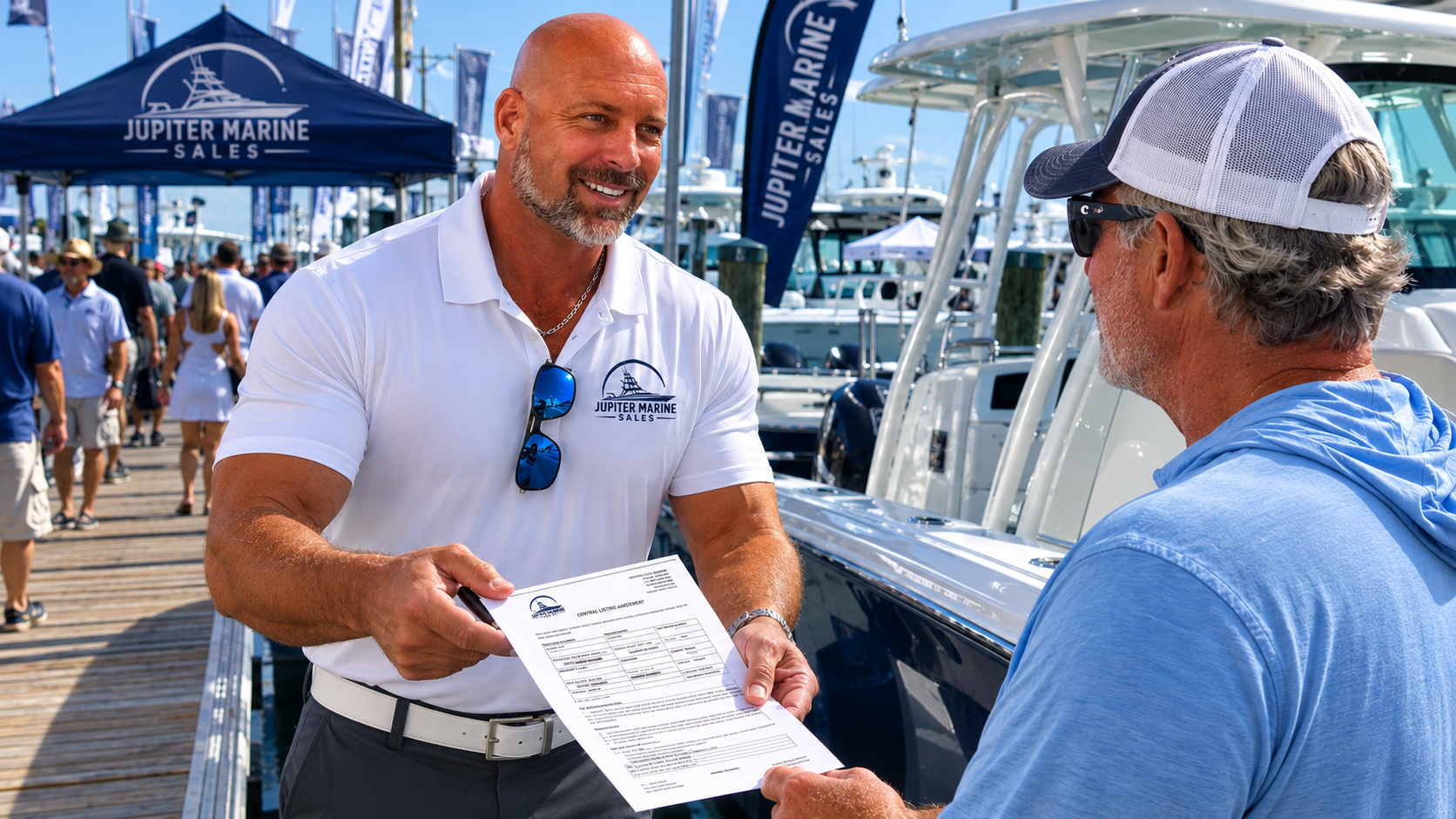
A professional yacht broker helps an owner accurately present the boat’s condition, equipment, service history, upgrades, and strongest selling points
By Jupiter Marine Sales
Selling a boat is about much more than posting a few photos and writing "Runs Great" in the description.
Your listing is often the very first impression buyers have of your boat, and in today's competitive market, that first impression can determine whether your phone rings or your listing gets overlooked.
At Jupiter Marine Sales, we've marketed and sold hundreds of boats ranging from center consoles and bay boats to luxury yachts and offshore sportfishing vessels. One thing has remained consistent throughout every transaction:
Great listings build buyer confidence.
The best boat listings don't simply describe a vessel—they answer questions before buyers ever ask them.
If you're wondering how to write a boat listing that stands out, attracts qualified buyers, and helps sell your boat faster, this guide will walk you through the same techniques professional yacht brokers use every day.
Many sellers make the mistake of treating their listing like a specification sheet.
They list the length.
The horsepower.
The fuel capacity.
The electronics.
While those details matter, they're already available on the manufacturer's website.
What buyers really want to know is:
What makes your boat different?
Professional yacht brokers understand that buyers aren't just evaluating the boat.
They're evaluating the owner.
The way you write your listing tells buyers a great deal about how the boat has been maintained and how transparent you are throughout the selling process.
Every boat has a story.
Professional yacht brokers know how to tell that story in a way that builds confidence rather than simply listing features.
Buyers want to understand how the boat has been owned, maintained, and enjoyed—not just how long it is or how many horsepower it has.
Instead of repeating factory specifications, explain the history of your boat.
Help buyers answer questions like:
Stories create confidence.
Confidence creates buyers.
We've seen buyers travel across the country to inspect a boat simply because the listing answered nearly every question they had before they ever picked up the phone.
A detailed listing doesn't just generate more inquiries—it generates better inquiries.
One of the fastest ways to lose a buyer is trying to hide a boat's history.
Every used boat has a past.
Honest sellers understand that transparency builds trust.
If your boat has experienced damage during your ownership, disclose it.
Just as importantly, explain what happened, how it was repaired, and who completed the work.
Professional repairs don't necessarily reduce a boat's value.
Unanswered questions do.
Florida is the boating capital of the United States—but it's also the hurricane capital.
Every year, thousands of boats experience damage from hurricanes, tropical storms, flooding, dock failures, falling trees, and storm surge.
Many of these boats are professionally repaired and continue providing years of dependable service.
The repair itself usually isn't what concerns buyers.
It's uncertainty.
If your boat has been repaired after storm damage or an insurance claim, explain:
The more transparent you are, the more confidence buyers will have.
This is one of the biggest mistakes boat owners make.
Many owners assume their insurance company will always maintain copies of repair documentation.
Unfortunately, that's often not the case.
Once an insurance claim has been settled and paid, obtaining repair records years later can become difficult—or impossible.
If your boat is ever damaged, create your own permanent file.
Keep copies of:
These records become incredibly valuable when it's time to sell your boat.
We've seen buyers walk away from boats simply because the seller couldn't explain an old insurance claim.
We've also seen buyers purchase boats with previous storm damage because the owner provided organized repair records, detailed photographs, and complete documentation.
Buyers don't necessarily fear repaired damage.
They fear uncertainty.
One of the biggest opportunities sellers miss is simply listing upgrades without explaining why they were made.
Professional brokers don't just tell buyers what's on the boat.
They explain why it matters.
Instead of writing:
Twin Mercury 400 Verados.
Tell buyers why you selected them.
For example:
We upgraded from the standard engine package to twin Mercury 400 Verados to improve offshore performance while carrying full fuel, additional passengers, dive gear, and fishing equipment. The larger engines also allow the boat to cruise comfortably at lower engine loads, improving efficiency and reducing stress during long runs offshore.
That explanation tells a much better story than simply listing horsepower.
If you selected a specific configuration, explain your reasoning.
Buyers appreciate learning from experienced owners.
Examples include:
These upgrades represent significant investments.
Explaining the reasoning behind them helps buyers appreciate their value.
Avoid vague statements like:
Instead, provide facts.
For example:
Twin Yamaha F300s recently completed their 300-hour service, including water pumps, thermostats, spark plugs, lower unit service, engine diagnostics, and new fuel filters.
Specific information builds credibility.
Marketing clichés don't.
Experienced buyers aren't simply evaluating the boat.
They're evaluating the owner.
A detailed, honest listing that openly discusses maintenance, repairs, upgrades, and ownership history tells buyers they're dealing with someone who has taken pride in the boat.
That confidence often results in stronger offers and smoother negotiations.
A great boat listing isn't about using impressive words.
It's about eliminating uncertainty.
Every maintenance record builds confidence.
Every documented upgrade tells a story.
Every repair invoice demonstrates transparency.
Every honest explanation makes buyers more comfortable moving forward.
At Jupiter Marine Sales, we've found that the boats generating the strongest interest almost always have one thing in common:
They leave very few questions unanswered.
Whether you're selling a center console, a family cruiser, a sportfish, or a luxury yacht, taking the time to write a complete, honest, and informative listing will almost always attract more qualified buyers and help your boat stand out in today's competitive market.
Now that you've written a professional listing, it's time to make sure buyers actually see it.
In our next guide, we'll explain where professional yacht brokers advertise boats, how listing syndication works, and how to maximize exposure to serious buyers across the world's largest boating marketplaces.

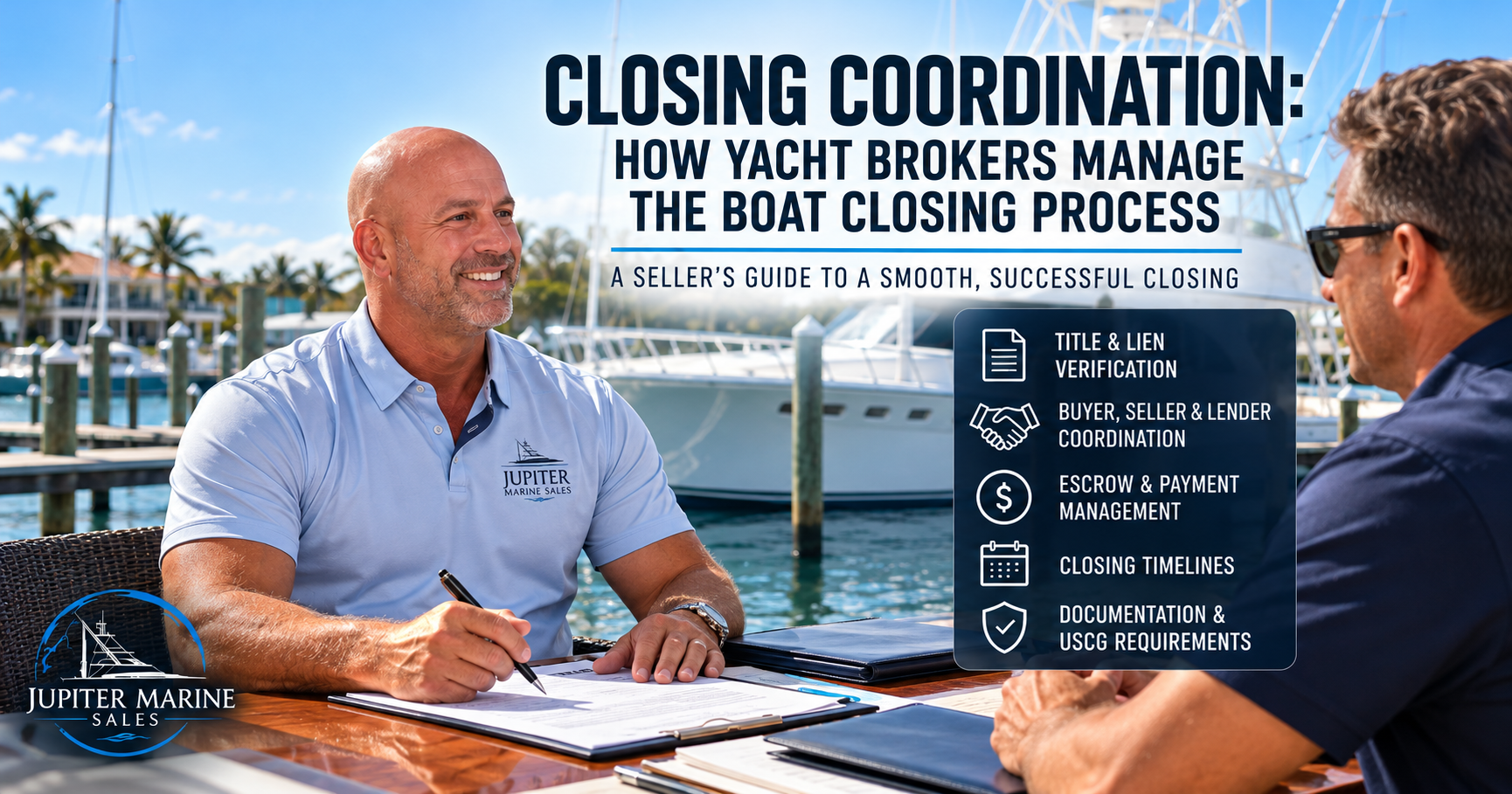
Jupiter Marine Sales | Professional Boat Selling Strategy — Article #13
A successful sea trial and survey are major milestones in selling a boat, but they do not mean the transaction is complete. Between a buyer's final acceptance and the actual closing, several importa
Getting a boat under contract is an important milestone in the selling process, but it is not the finish line.
After the seller accepts an offer and the purchase agreement is executed, the transaction typically moves into the buyer’s inspection and due-diligence period. For most brokerage t
A marine survey is one of the most important stages of buying or selling a boat—but what happens after the survey can be just as important as the inspection itself.
Survey day is often where a straightforward boat transaction suddenly becomes complicated.
A surveyor m
Receiving an offer is an important milestone in the sale of a boat or yacht—but it is not the end of the process.
It is the beginning of the negotiation.
The buyer may begin below the asking price. The seller may want to counter. The parties may disagree about the deposit, survey peri