Loading...
Loading...
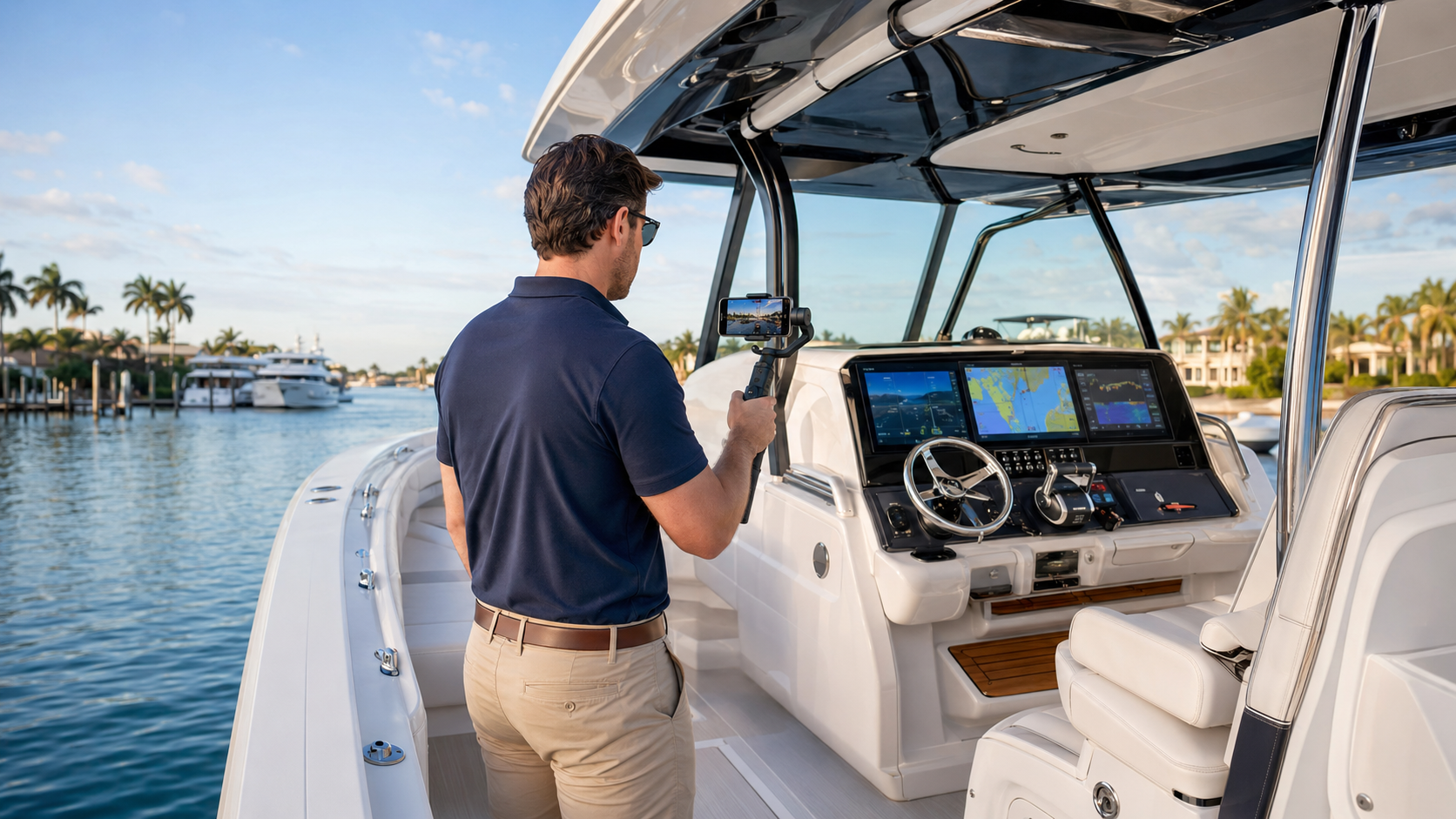
A professional boat walkthrough video should clearly present the vessel’s layout, condition, electronics, equipment, storage, engines, and most valuable features
A strong listing description gives buyers the information they need. Professional photography creates the first impression.
But video is what allows buyers to imagine themselves owning the boat.
Today’s boat buyers frequently begin their search from hundreds—or even thousands—of miles away. Before scheduling a showing, booking a flight, hiring a surveyor, or making an offer, they want to understand exactly what they are considering.
A professional video walkthrough allows them to experience the boat before ever stepping aboard.
At Jupiter Marine Sales, video is an important part of presenting a vessel properly. A thoughtfully filmed walkthrough can help a boat stand out, answer common buyer questions, build confidence, and generate more qualified inquiries.
However, simply walking around a boat with a phone is not enough.
A successful boat video needs a plan.
Boat buyers are visual.
Specifications such as length, horsepower, fuel capacity, electronics, and engine hours are important, but those details do not always communicate how a boat actually feels.
Video helps buyers understand:
A well-produced video fills the gap between looking at photographs and physically inspecting the vessel.
It also gives buyers something they can share with a spouse, business partner, captain, mechanic, or marine surveyor before deciding whether to move forward.
Video reveals more than photography.
A photographer can carefully frame individual areas, but a walkthrough captures entire spaces and the transitions between them. Clutter, dirt, loose equipment, personal belongings, stained cushions, tangled dock lines, and an untidy engine compartment become much more noticeable.
Before filming, the boat should be prepared as if a serious buyer were arriving for a private showing.
That means:
The goal is to make the boat appear clean, cared for, organized, and ready to use.
If the video begins with a messy cockpit or dirty machinery space, many buyers will assume the boat has not been properly maintained.
A professional walkthrough should feel natural, but it should not be improvised.
Before recording, decide how the viewer will move through the boat. The video should follow a logical path rather than jumping randomly between features.
For many center consoles and dayboats, that sequence may be:
For larger yachts, the walkthrough may begin at the aft deck, move through the salon and galley, continue into the accommodations, and then cover the flybridge, engine room, bow, and exterior decks.
A planned route keeps the video easy to follow and helps prevent important equipment from being overlooked.
The first few moments of a video are extremely important.
Do not begin with a long introduction, several minutes of talking, or an extended shot of the marina parking lot. Start with the boat itself.
Show the vessel’s profile, condition, layout, or most impressive feature immediately.
Depending on the boat, that may be:
Buyers should quickly understand why this particular boat deserves their attention.
One of the most common mistakes in boat marketing is mentioning expensive equipment without clearly showing it.
If a seller invested in premium equipment, the video should document it.
That may include:
Do not simply point the camera toward a feature for one second. Show its condition, placement, controls, access, and relationship to the rest of the boat.
When practical, demonstrate that the equipment powers up and functions.
The helm is one of the first areas serious buyers evaluate.
The video should provide a clear, steady view of:
Power up the electronics before recording so buyers can see the displays operating.
A dark screen tells the viewer very little. A properly powered helm looks more complete and gives buyers additional confidence that the boat is ready for use.
The engine room or mechanical compartment may not be the most glamorous part of the boat, but it is often one of the most important.
Experienced buyers pay close attention to machinery spaces because they can reveal how a vessel has been maintained.
The video should show:
A clean, organized engine room can be one of the strongest selling features on a well-maintained boat.
If the machinery space is dirty, poorly lit, cluttered, or covered in oil residue, buyers may assume there are larger maintenance issues hiding beneath the surface.
Professional marketing should present a boat in its best possible light, but it should never misrepresent the vessel.
A video should not deliberately conceal obvious damage, worn upholstery, corrosion, repaired areas, or known deficiencies. Surprises discovered during a showing or marine survey can damage trust and derail a transaction.
If the boat has a visible imperfection, it is often better to explain it clearly and state whether it will be repaired.
Transparency helps serious buyers make informed decisions. It also reduces wasted showings involving buyers who would have rejected the boat had they known its actual condition beforehand.
The purpose of professional video is not to make an imperfect boat appear perfect.
The purpose is to present the vessel accurately, professionally, and confidently.
Fast camera movements can make a boat appear smaller and leave viewers feeling disoriented.
Move slowly through each area. Pause long enough for buyers to understand what they are seeing. Avoid rapid panning, excessive zooming, vertical cellphone footage, and constant changes in camera direction.
Whenever possible:
The video does not need to resemble a television commercial, but it should feel deliberate and professional.
A dockside walkthrough explains the layout and condition of the boat. Running footage shows the lifestyle and performance the buyer is purchasing.
Useful on-water footage may include:
Running footage is especially valuable for center consoles, sportfishing boats, performance boats, and large motor yachts.
It helps transform a listing from a collection of specifications into a genuine ownership experience.
A knowledgeable broker can add enormous value to a walkthrough by explaining the boat’s most important features.
Good narration should answer the questions serious buyers are likely to ask:
Avoid reading every specification directly from the listing. Buyers can review those details separately.
Use the video to provide context that specifications alone cannot communicate.
Longer is not always better.
A smaller boat may only require a few minutes to show properly. A large yacht with multiple staterooms, extensive machinery, and several exterior areas will naturally require more time.
The goal is to be thorough without becoming repetitive.
Each segment should either:
If a section does none of those things, it probably does not need to remain in the final video.
A detailed walkthrough does more than generate attention. It helps qualify inquiries.
Buyers who contact the broker after viewing the complete video generally have a better understanding of the boat’s condition, layout, equipment, and suitability.
That can lead to:
This is particularly important in Florida, where buyers frequently search across Jupiter, Palm Beach, Fort Lauderdale, Miami, Naples, Sarasota, and other boating markets before choosing which vessels to inspect.
A professional video can help convince a buyer that your boat belongs at the top of that list.
Sellers sometimes rush to create a video immediately after signing a listing agreement.
If cushions are missing, the boat is dirty, equipment has not been installed, personal belongings remain onboard, or maintenance work is still underway, that video can create the wrong first impression.
Digital marketing moves quickly. Once buyers see a poorly prepared boat, it can be difficult to change their perception.
Finish the preparation first.
Then photograph and film the vessel when it looks its best.
Buyers do not expect every used boat to be flawless.
What makes them uncomfortable is uncertainty.
A detailed walkthrough can remove much of that uncertainty by showing the condition of the boat, the quality of its equipment, the layout, the machinery spaces, and the care it has received.
That confidence is especially important for remote buyers who may be deciding whether the vessel is worth the time and expense of traveling to see it.
Professional video does not replace an in-person inspection, engine evaluation, sea trial, or marine survey.
It helps serious buyers decide that the boat is worth taking those next steps.
Selling a boat successfully requires more than uploading several pictures and waiting for inquiries.
It requires:
Jupiter Marine Sales combines boating experience, professional marketing, modern technology, and transaction support to help owners present their vessels properly and reach qualified buyers.
Our listings are marketed through leading boating platforms, social media, our professional network, the Jupiter Marine Sales website, and our mobile app.
Before placing your boat on the market, let Jupiter Marine Sales help you determine its current value, prepare it correctly, and build a professional marketing strategy designed to attract serious buyers.
Whether you are selling a center console, sportfishing boat, express cruiser, motor yacht, or luxury yacht, our team can guide you from the initial market analysis through photography, advertising, showings, survey, sea trial, closing, and delivery.
Visit Jupiter Marine Sales to explore our inventory or speak with a member of our brokerage team.
Experience. Technology. Trust.
That is how Jupiter Marine Sales helps owners sell smarter and buyers move forward with confidence.

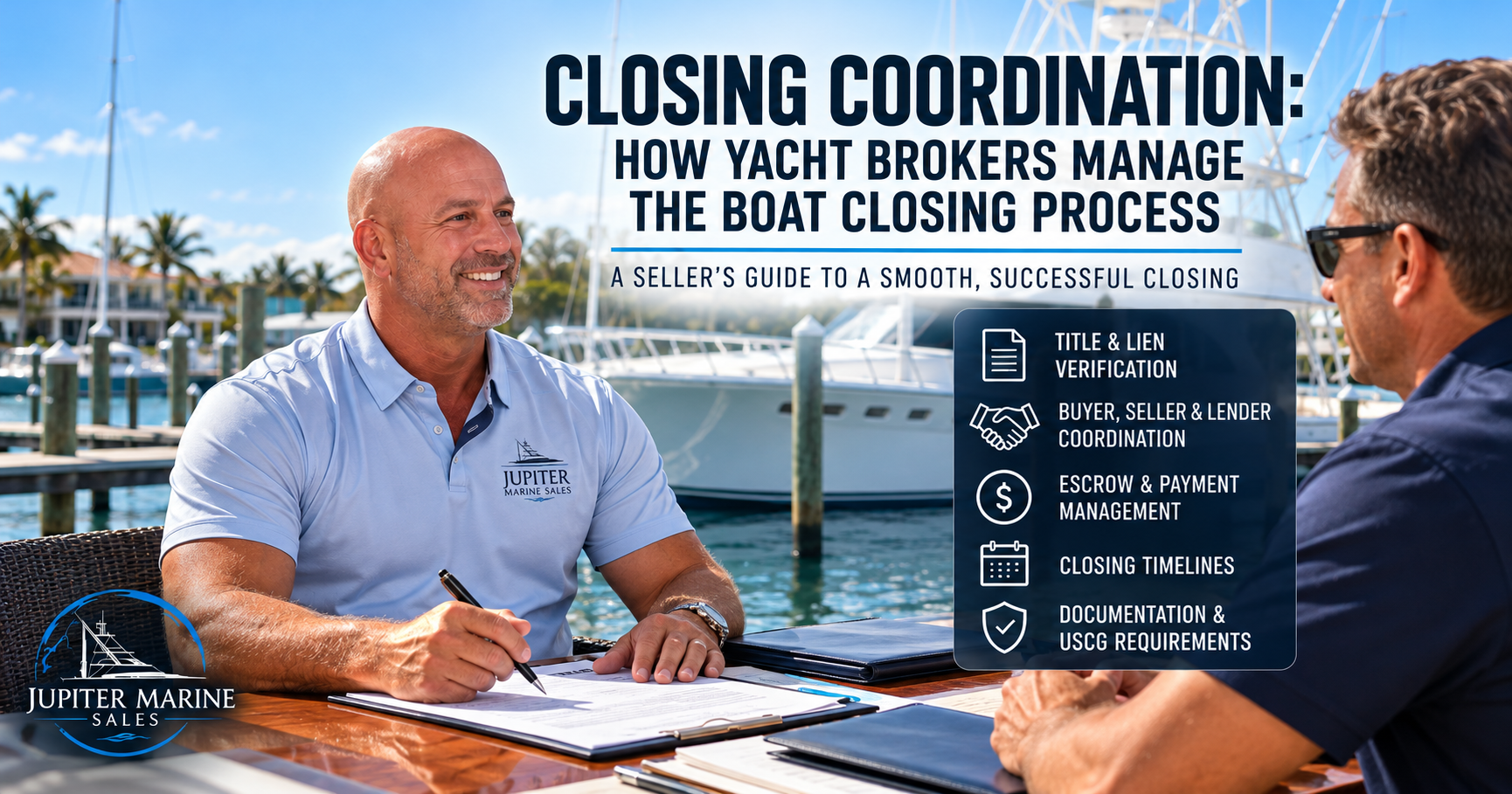
Jupiter Marine Sales | Professional Boat Selling Strategy — Article #13
A successful sea trial and survey are major milestones in selling a boat, but they do not mean the transaction is complete. Between a buyer's final acceptance and the actual closing, several importa
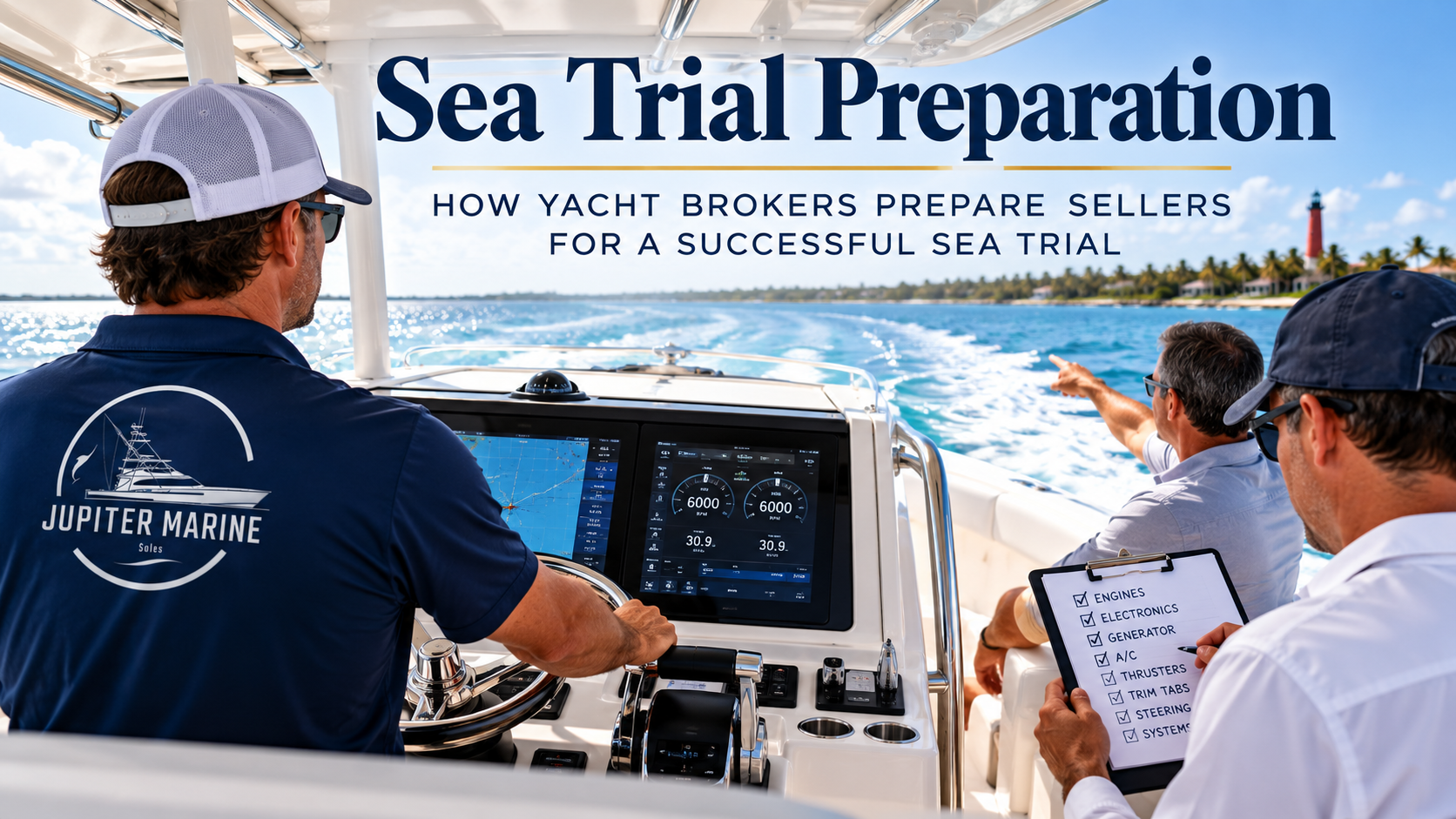
Getting a boat under contract is an important milestone in the selling process, but it is not the finish line.
After the seller accepts an offer and the purchase agreement is executed, the transaction typically moves into the buyer’s inspection and due-diligence period. For most brokerage t
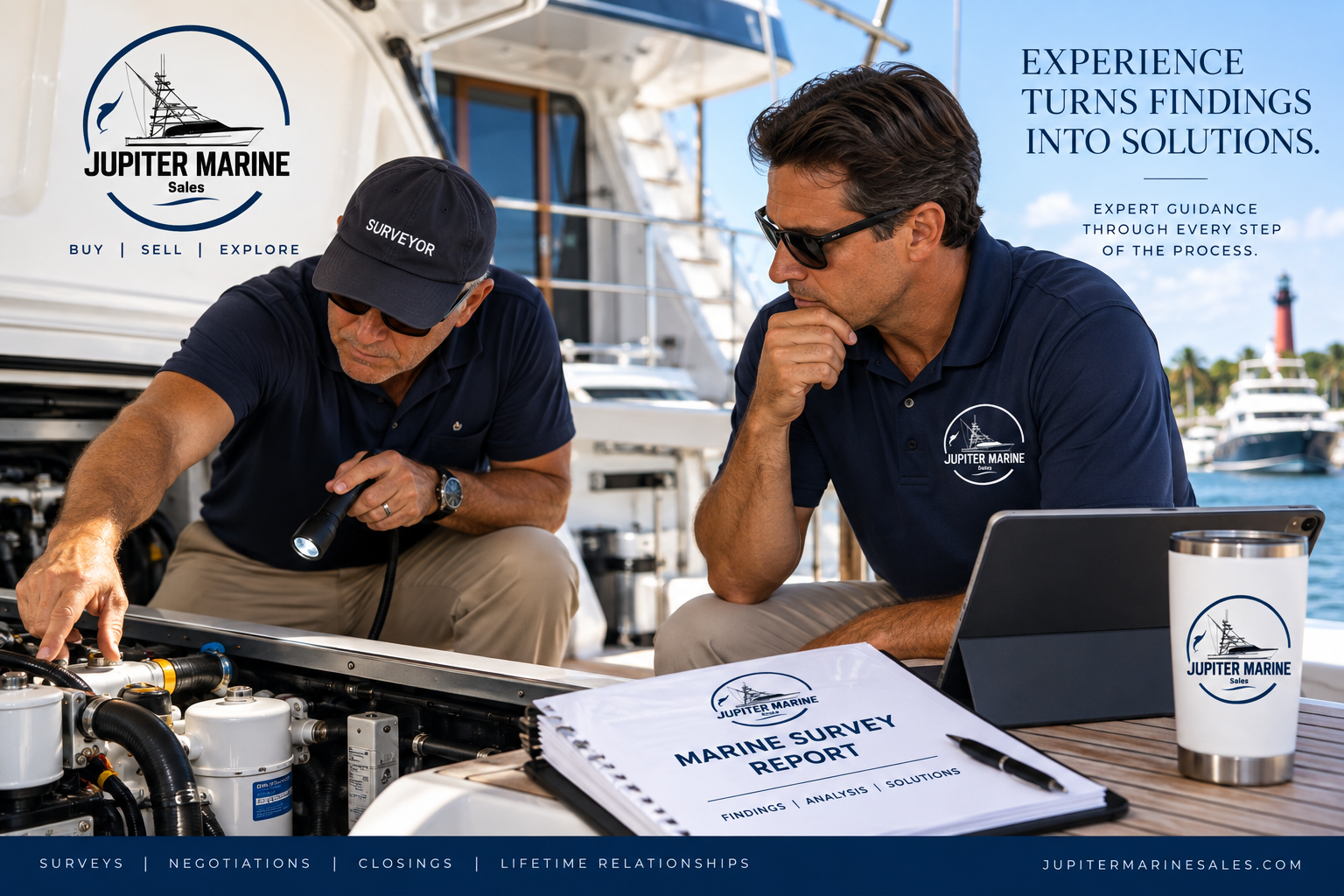
A marine survey is one of the most important stages of buying or selling a boat—but what happens after the survey can be just as important as the inspection itself.
Survey day is often where a straightforward boat transaction suddenly becomes complicated.
A surveyor m
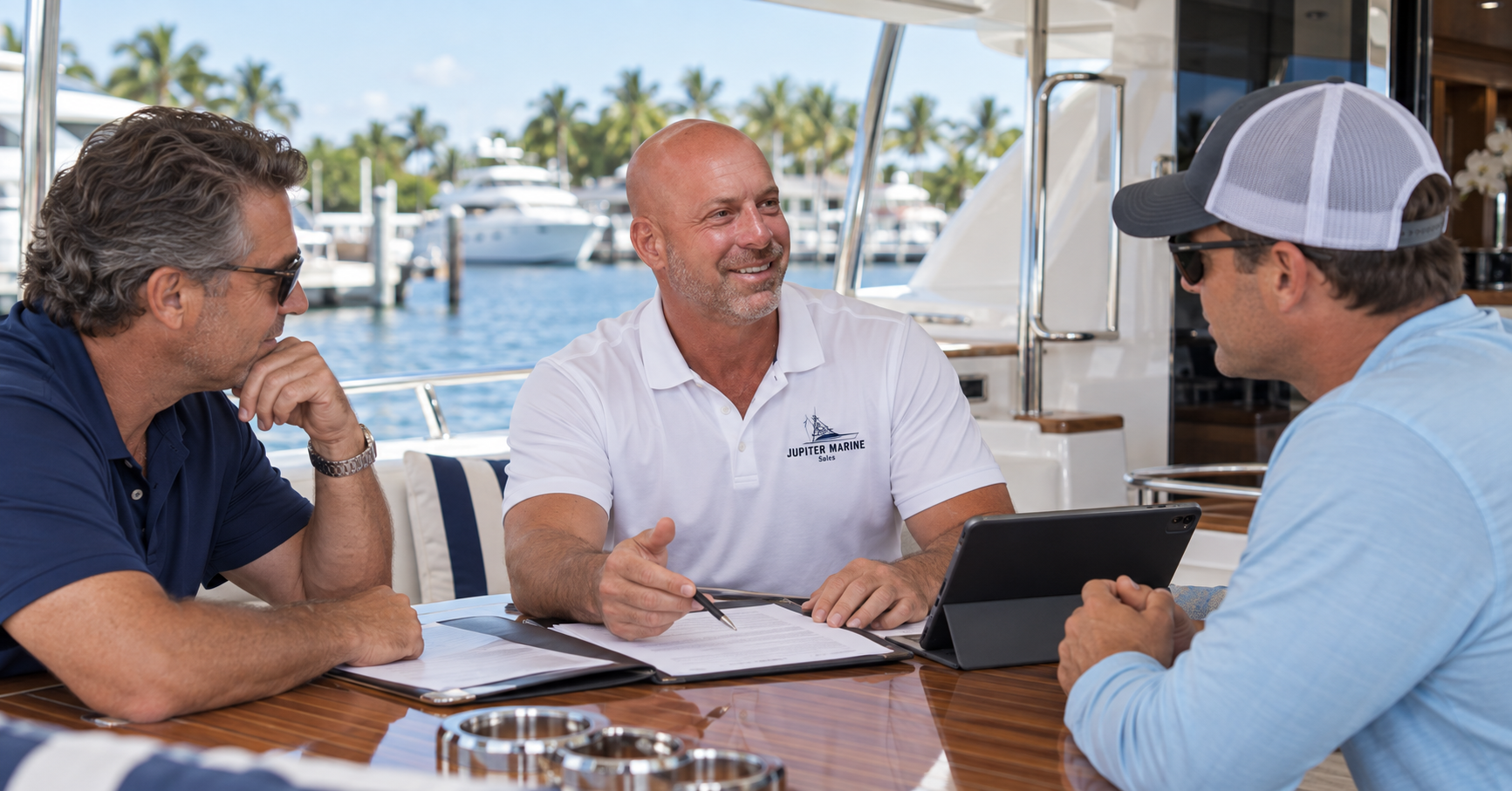
Receiving an offer is an important milestone in the sale of a boat or yacht—but it is not the end of the process.
It is the beginning of the negotiation.
The buyer may begin below the asking price. The seller may want to counter. The parties may disagree about the deposit, survey peri