
Loading...
Loading...
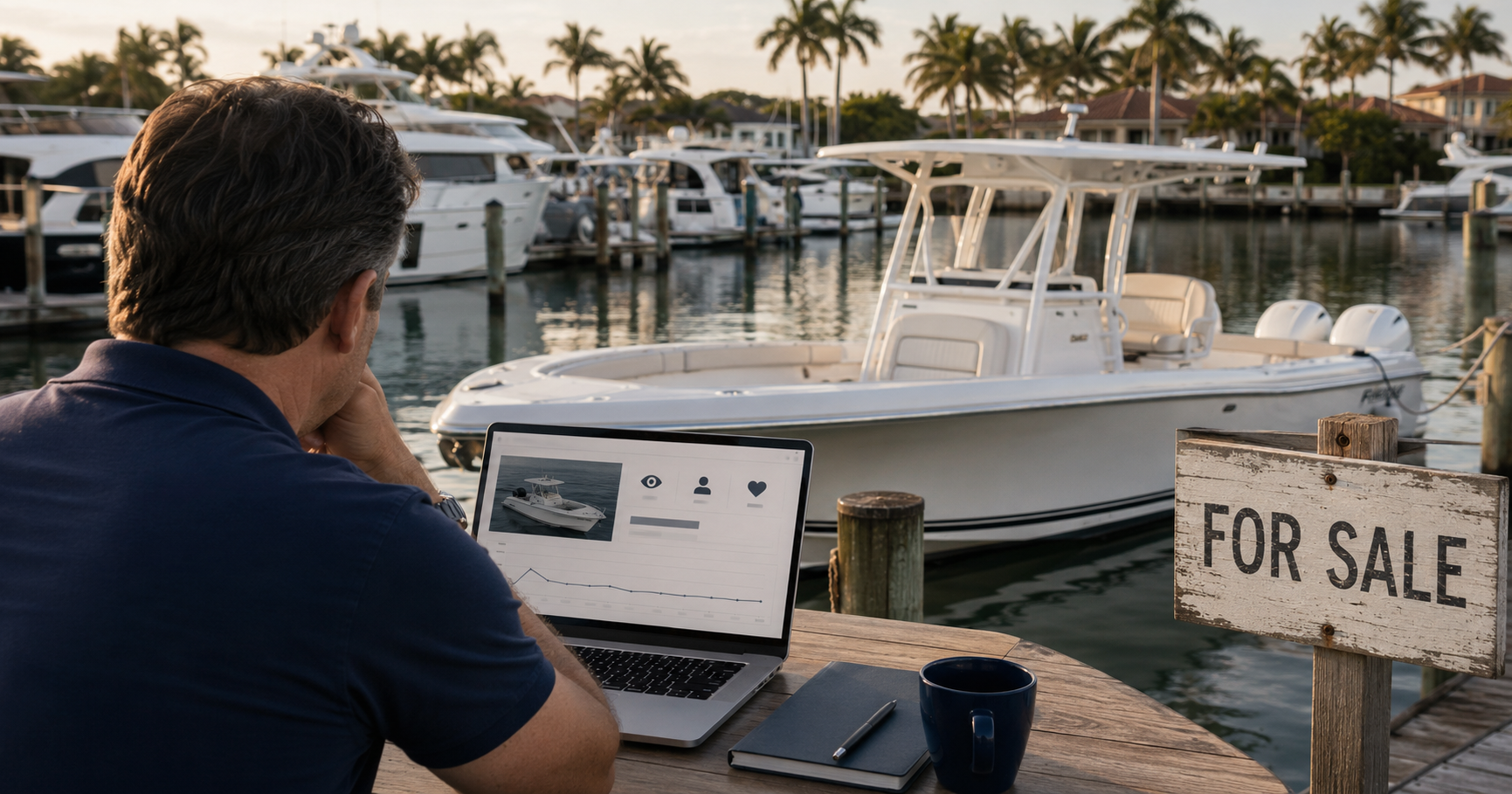
Even an attractive, well-equipped boat can remain unsold when pricing, presentation, exposure, maintenance, access, or the overall sales strategy misses the market
A boat can be mechanically sound, well equipped, and located in one of the most active boating markets in the country—and still sit unsold for months.
When that happens, sellers often blame interest rates, fuel prices, the economy, the season, or a lack of serious buyers. Those factors can affect demand, but they rarely tell the whole story.
Most unsuccessful boat listings have more than one problem. The asking price may be slightly high, the photographs may be average, the service records may be incomplete, and showings may be difficult to arrange. None of those issues alone seems fatal. Together, they give buyers several reasons to move on to the next boat.
At Jupiter Marine Sales, we have sold more than 500 boats by focusing on the entire transaction—not just placing an advertisement online. Based on that experience, these are 25 of the most common reasons boats fail to sell and what owners can do about them.
Price is the most common reason a boat does not sell.
Buyers can compare dozens of similar boats within minutes. They see the model years, engine hours, locations, equipment, and asking prices. If one boat appears materially more expensive without a clear reason, many buyers will never inquire.
An overpriced boat does not simply receive lower offers. It can receive no meaningful offers at all.
The correct asking price should reflect current competition, recent sales, engine hours, condition, equipment, service history, location, and demand. It should not be based solely on what the owner paid or needs to receive.
Owners remember family trips, improvements, maintenance, and years of enjoyment. Buyers see a used boat competing with other used boats.
That difference in perspective can create an emotional asking price.
Statements such as “I know what I have” or “I do not need to sell” may be understandable, but they do not establish market value. A seller can choose any asking price, but the market decides whether the boat is worth pursuing.
Owners who separate personal value from market value are better positioned to make rational decisions.
Maintenance preserves a boat’s condition and value, but it generally does not return every dollar spent.
The same is true for electronics, upholstery, audio systems, bottom paint, detailing, storage, and repairs. These expenses may make the boat more attractive than a neglected alternative, but buyers do not normally add their full original cost to the boat’s value. I equate this with putting $2000 rims on a $500 car. In the end it's still a $500 car. Boats are similar in that we never really see full value for expensive upgrades like FLIR, Autopilot, Radar, New Upholstery, Sea Keepers and more. It may help attract more buyers in the end but it rarely affects the final price.
A seller may have spent $50,000 during ownership without increasing market value by $50,000. The spending can still be important—it may help the boat sell faster or justify the higher end of its realistic range—but it should not be treated like cash stored onboard.
Not every boat with the same manufacturer and length is a valid comparison.
Model year, engine package, hours, layout, condition, equipment, location, storage, warranty, and service history can create major value differences.
Sellers also tend to compare their boat with the highest-priced listings while ignoring lower-priced competition. Asking prices are not completed sale prices, and an overpriced comparable that has been sitting for a year does not prove another boat is worth the same amount.
A useful market analysis considers the entire competitive field and adjusts for meaningful differences. Large Brokerages use MLS data from thousands of actual reported sales. Actual sales data is the real key to fair pricing.
Buyers usually form their first opinion before reading a single paragraph.
Dark, blurry, crooked, or poorly composed photographs make a boat look less valuable. Phone screenshots, vertical images, cluttered docks, dirty waterlines, closed covers, and badly lit interiors can undermine an otherwise good vessel.
The first days of a listing often produce the greatest attention. Launching with weak photographs wastes that opportunity.
Professional-quality images should be ready before the listing goes live—not added weeks later after buyers have already dismissed it.
Ten attractive exterior photographs do not tell buyers enough about a complex boat.
A complete photo package should normally show:
Missing areas create uncertainty. Buyers may assume the seller is avoiding something, even when the real problem is simply an incomplete photo shoot. A proper photo shoot should be around 35 photos for Google to properly index the listing.
Buyers do not separate cleanliness from maintenance as easily as owners sometimes expect.
Mildew, stained cushions, full trash bins, loose gear, oily bilges, dirty strainers, salt-covered engines, and personal belongings make buyers question how the boat has been cared for mechanically.
Preparation should include the spaces most owners rarely show: engine rooms, bilges, lockers, battery compartments, strainers, pumps, wiring, and anchor lockers.
A clean boat does not guarantee a good survey, but a neglected-looking boat immediately lowers confidence.
“Beautiful boat, loaded, low hours, must see” is not a useful description.
Serious buyers want the ownership story: how the boat was used, where it was stored, why it is being sold, what has been serviced, which upgrades were completed, what equipment is included, and what makes it different from competing boats.
Incorrect engine hours, model years, equipment claims, or dimensions damage credibility. A description copied entirely from the manufacturer explains the model but says nothing about the actual boat for sale.
For a complete breakdown, read How to Write a Boat Listing That Actually Sells.
Valuable equipment should not be buried in a sentence or left out entirely.
Buyers may be comparing Seakeepers, bow and stern thrusters, trolling motors, Power-Poles, lithium batteries, watermakers, generators, FLIR, Starlink, premium electronics, outriggers, dive doors, summer kitchens, and other high-value options.
Identify brands and models whenever possible, photograph the equipment, and explain whether it operates properly.
If the listing says “Garmin electronics” but never shows the displays or describes the package, buyers cannot fully evaluate the boat’s value.
Photographs capture individual spaces. A walkthrough video helps buyers understand how the boat fits together.
A useful video shows the layout, condition, storage, helm, electronics, machinery spaces, engines, and major equipment in a logical order. It can answer many questions before a buyer travels to the boat.
Video is especially valuable for out-of-area buyers who may be deciding whether the vessel deserves the time and expense of an in-person visit.
Our guide, How to Create a Boat Video That Attracts Serious Buyers, explains how professional presentation improves buyer confidence.
One marketplace, one Facebook post, or one sign at the marina is rarely a complete marketing strategy.
The right buyer may begin on a major boating website, search Google, open an email campaign, watch a video, use a mobile app, contact another broker, or discover the boat through social media.
Professional exposure should place the boat wherever qualified buyers are actively looking.
Our article Where Should You Advertise a Boat for Sale? explains why maximum exposure requires multiple coordinated channels.
Publishing is not the same as marketing.
Listings lose visibility as newer inventory appears. A boat that is posted once and ignored can become nearly invisible even though it remains technically active.
Ongoing promotion may include refreshed social content, email campaigns, broker outreach, updated videos, price-positioning reviews, website features, and new photographs when appropriate.
The message should not be repeated mechanically every week. Sellers and brokers should find useful reasons to reintroduce the boat to the market.
Buyers often contact multiple listings at the same time.
If a seller takes two days to respond, another broker may already have answered the questions, discussed the buyer’s needs, and scheduled a showing on a competing boat.
Fast responses communicate that the sale is being handled professionally. They should confirm availability, address the buyer’s questions, and suggest a clear next step.
An automated acknowledgment can help, but it does not replace a knowledgeable human response.
Many transactions require more than one conversation.
A buyer may need maintenance records, insurance guidance, financing, measurements, storage information, additional photographs, or time to discuss the boat with family.
Good follow-up answers the buyer’s actual concerns. It should not consist of repeatedly asking, “Are you still interested?”
Without organized follow-up, promising inquiries disappear and the seller may never understand why.
A buyer should not have to wait two weeks, coordinate with several people, climb over another boat, or travel to a storage facility only to discover that no one has the keys.
Boats can be difficult to access because they are behind private homes, stored indoors, blocked in a yard, covered extensively, or located far from the person responsible for showing them.
Those realities must be managed before the listing launches. Establish access procedures, key control, notice requirements, marina permissions, and a realistic showing schedule.
Buyers usually choose the path with less friction.
Owners have every right to protect their property and privacy. Serious buyers, however, need reasonable opportunities to inspect the boat.
Excessive restrictions—no weekends, no short-notice appointments, no broker access, no systems demonstrations, or no second showings—can make a sale unnecessarily difficult.
Every visitor should be identified and accompanied, but qualified buyers should be able to evaluate the vessel without feeling that the seller is obstructing the process.
Small problems become large concerns when sellers ignore them.
A failed pump, warning light, leaking seal, dead battery, nonfunctioning refrigerator, inoperative trim tab, or broken latch may be inexpensive to repair. Left unresolved, it suggests deferred maintenance and makes buyers wonder what else is wrong.
Not every item must be repaired before listing, particularly when price and disclosure account for it. But known problems should be evaluated intentionally—not discovered accidentally during a showing or survey.
Buyers often walk away because of uncertainty rather than a confirmed defect.
A boat may have been serviced properly, but if the owner cannot produce invoices, dates, engine hours, or a captain’s log, the buyer has to decide how much trust to place in verbal assurances.
Collect records before accepting an offer:
Organized records can support value, shorten due diligence, and reduce suspicion.
Florida boats may have experienced storm damage, insurance claims, groundings, collisions, fiberglass repairs, or equipment failures.
A documented professional repair does not automatically prevent a sale. Hidden history can.
If a boat sustained hurricane damage, keep the photographs, invoices, insurance documents, and repair details. Explain what happened, what was repaired, and who performed the work.
Buyers are more likely to accept a known, well-documented history than an unpleasant discovery during survey or a contradiction uncovered later.
A listing can look impressive online and lose the buyer within minutes at the dock.
Flat batteries, alarms, difficult starting, heavy smoke, vibration, odors, failed electronics, nonfunctioning air conditioning, dirty strainers, or a poorly prepared engine room immediately change the conversation.
Before a showing or sea trial, the boat should be checked systematically. Engines, generator, electronics, pumps, lighting, air conditioning, steering, trim systems, and other relevant equipment should be ready to demonstrate.
The sea trial is not the time to discover problems the seller could have identified earlier.
Engines represent a large portion of a boat’s value and risk.
Overdue annual service, missing major-service items, old fuel filters, worn belts, cracked hoses, corroded components, and unverified engine hours can make buyers cautious before a mechanical inspection even begins.
Sellers should understand what service is due and decide whether to complete it before listing. Current service with invoices is easier to market than a promise that the next owner can handle it.
Low hours do not compensate for neglect. A regularly used, properly serviced engine may be more attractive than a lower-hour engine that has sat unattended.
The market communicates through views, inquiries, showings, comments, and offers.
If a listing receives many views but no inquiries, the price or presentation may be preventing engagement. If it receives inquiries but no showings, buyers may be finding a mismatch in the details. If it receives showings but no offers, condition, price, records, or buyer experience may be the issue.
One person’s opinion should not force an immediate change. Repeated feedback from qualified buyers deserves attention.
Ignoring every concern because “they are just trying to steal the boat” prevents the seller from learning what the market is saying.
Time on market changes how buyers perceive a boat.
A listing that has remained unchanged for months may lead buyers to assume it is overpriced, has failed surveys, or has an undisclosed problem—even when none of those assumptions is true.
Simply deleting and reposting the same listing does not solve the underlying issue.
A proper reset may require:
The objective is not to disguise the listing’s age. It is to correct the reasons it has not converted.
An offer is more than a number.
Price matters, but so do the deposit, financing, survey period, closing date, contingencies, included equipment, delivery requirements, and likelihood of completion.
A clean offer from a financially prepared buyer may be more valuable than a higher offer filled with uncertainty.
Sellers also lose opportunities when they take reasonable offers personally or refuse to counter. A low offer does not require acceptance, but it can begin a negotiation.
The broker should explain the complete offer and help the seller evaluate risk, timing, and net proceeds—not simply react to the headline price.
Not every boat requires the same strategy, and not every seller needs the same level of assistance.
Some private owners are prepared to photograph the boat, create the listing, answer inquiries, qualify buyers, conduct showings, negotiate, manage surveys, and coordinate closing. Others need professional representation.
When choosing a broker, sellers should evaluate:
A listing agreement alone does not sell a boat. The broker needs a specific plan and must continue working after the listing is published.
If your boat has been on the market without serious activity, begin with four questions:
Review where the boat is advertised, how it ranks in marketplace searches, whether email and social promotion are being used, and whether other brokers can easily find and share it.
If impressions are high but listing views are low, the lead photograph, headline, price, model information, or location may not be competitive.
If people view the listing but do not make contact, the price, description, photographs, equipment, or disclosed condition may not justify the next step.
If qualified buyers see the boat but do not make offers, pay close attention to condition, cleanliness, records, mechanical operation, access, and the difference between the online presentation and the in-person experience.
This approach identifies where the sales process is breaking down.
One of the hardest realities for sellers is that the market evaluates the boat as it exists today.
It does not reimburse ownership expenses, reward sentimental value, or guarantee a return based on the original purchase price. It compares your boat with the alternatives available to the buyer right now.
That is not bad news. It gives the seller a clear path forward.
Price the boat correctly. Prepare it thoroughly. Document the history. Present it professionally. Advertise it broadly. Make it accessible. Respond quickly. Listen to qualified feedback. Address problems instead of explaining them away.
Boats sell when buyers see sufficient value and confidence to take the next step.
Jupiter Marine Sales helps owners evaluate the entire sales process, including market positioning, preparation, professional photography, video, advertising, buyer qualification, accompanied showings, negotiations, surveys, sea trials, documentation, and closing.
We have sold more than 500 boats by combining honest communication with a high-exposure, low-stress approach to brokerage.
If your boat has been sitting on the market—or if you want to avoid these problems before listing—visit Jupiter Marine Sales to speak with an experienced yacht broker.

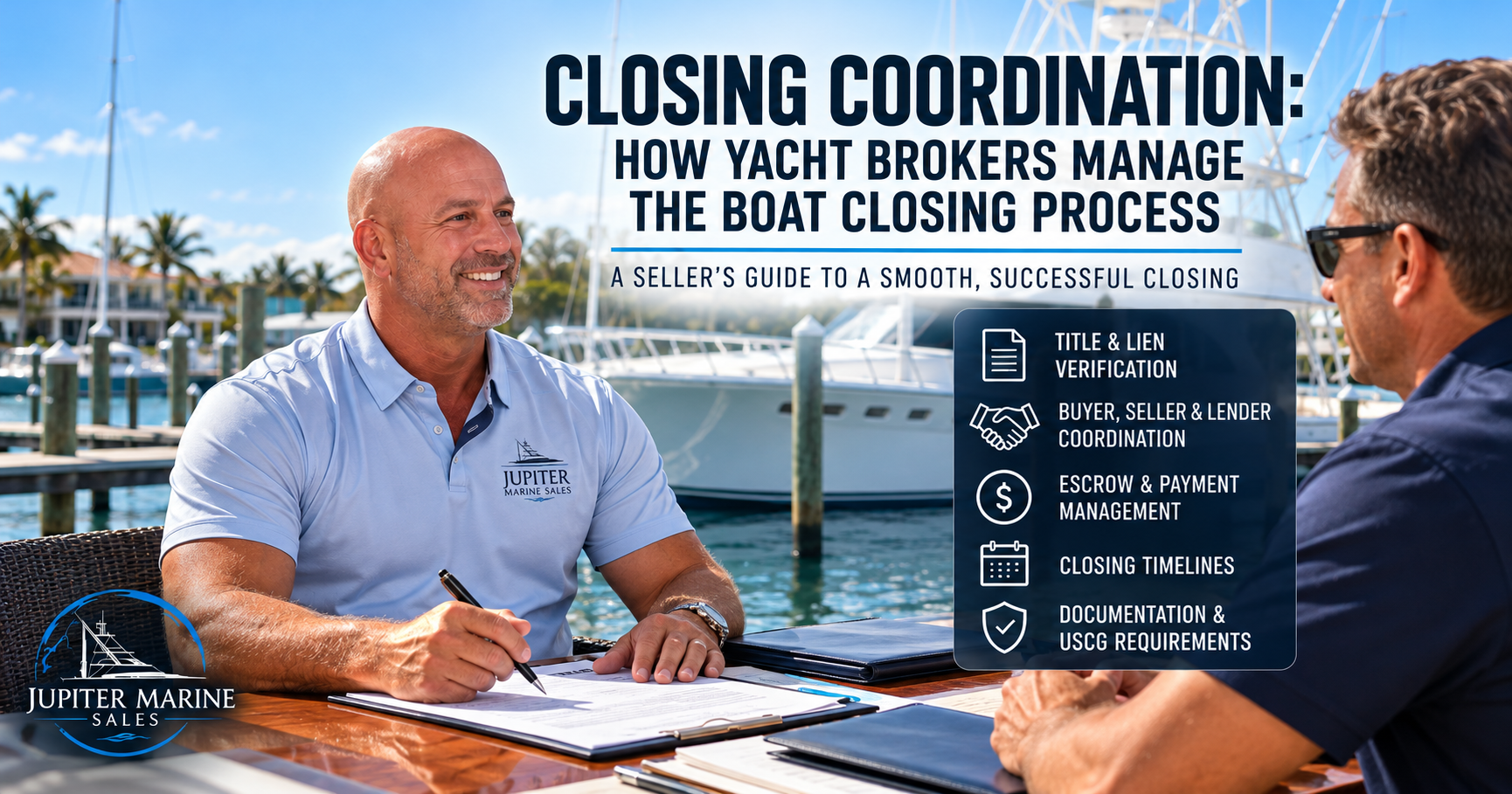
Jupiter Marine Sales | Professional Boat Selling Strategy — Article #13
A successful sea trial and survey are major milestones in selling a boat, but they do not mean the transaction is complete. Between a buyer's final acceptance and the actual closing, several importa
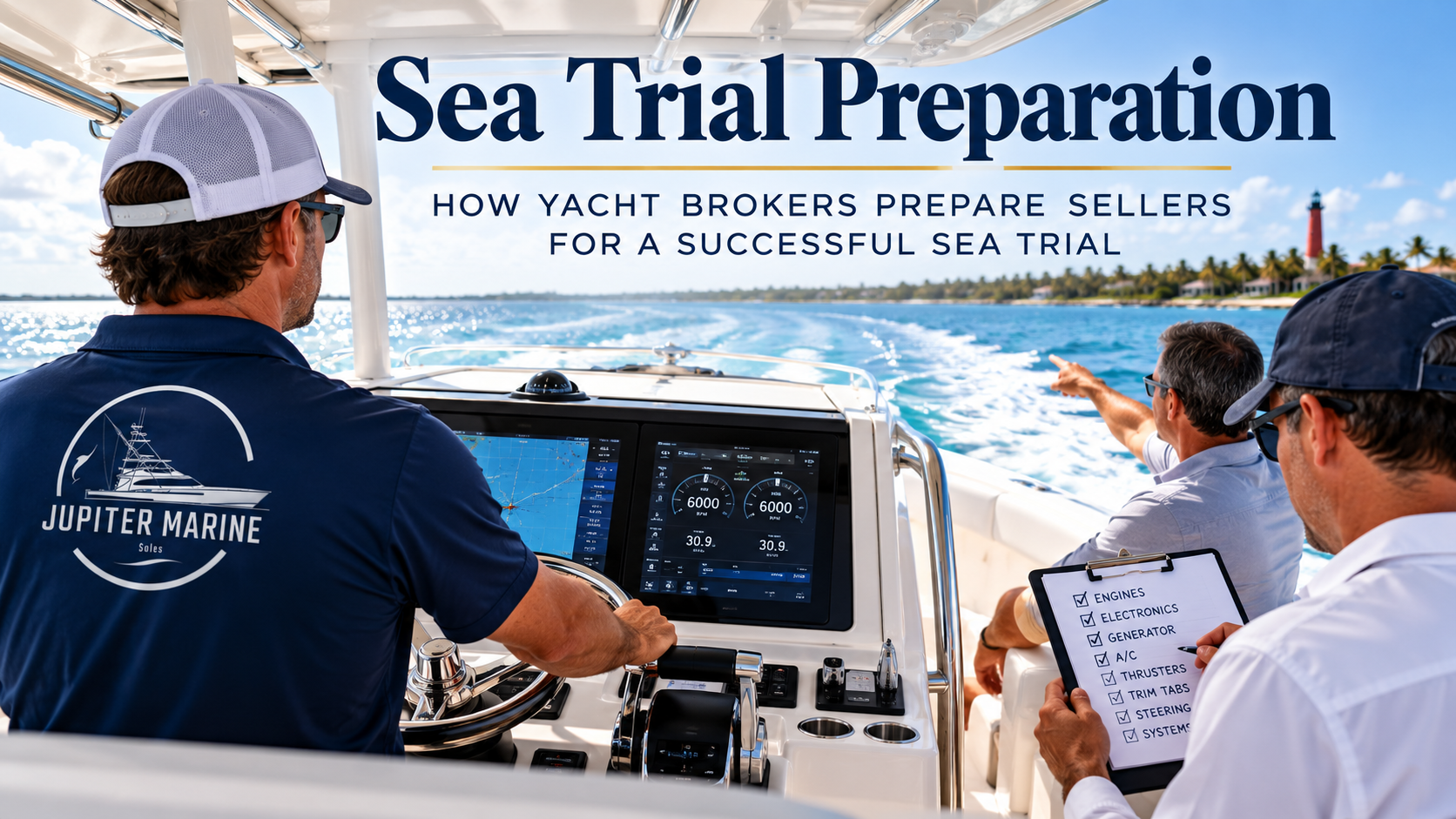
Getting a boat under contract is an important milestone in the selling process, but it is not the finish line.
After the seller accepts an offer and the purchase agreement is executed, the transaction typically moves into the buyer’s inspection and due-diligence period. For most brokerage t

A marine survey is one of the most important stages of buying or selling a boat—but what happens after the survey can be just as important as the inspection itself.
Survey day is often where a straightforward boat transaction suddenly becomes complicated.
A surveyor m
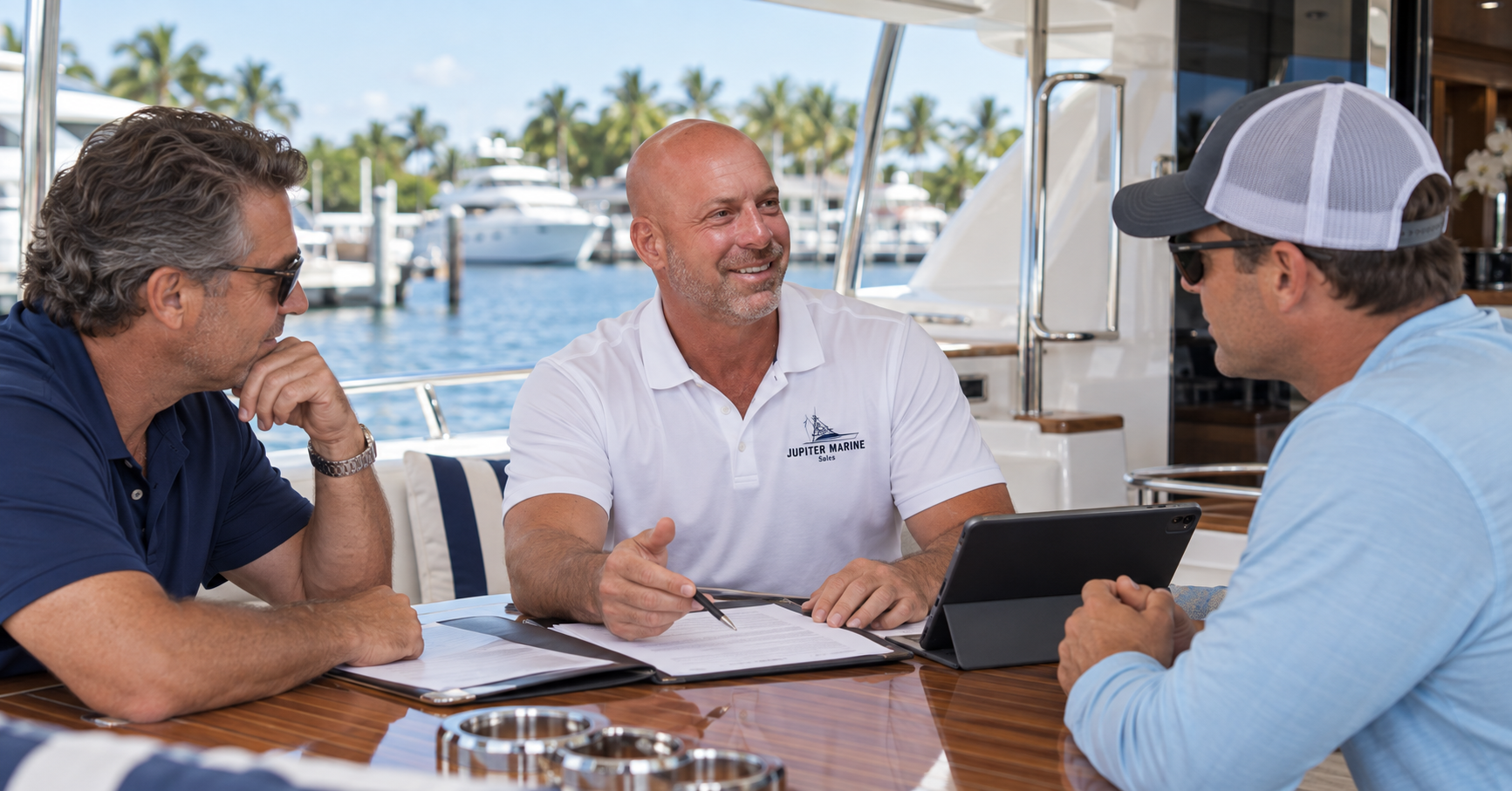
Receiving an offer is an important milestone in the sale of a boat or yacht—but it is not the end of the process.
It is the beginning of the negotiation.
The buyer may begin below the asking price. The seller may want to counter. The parties may disagree about the deposit, survey peri