Loading...
Loading...
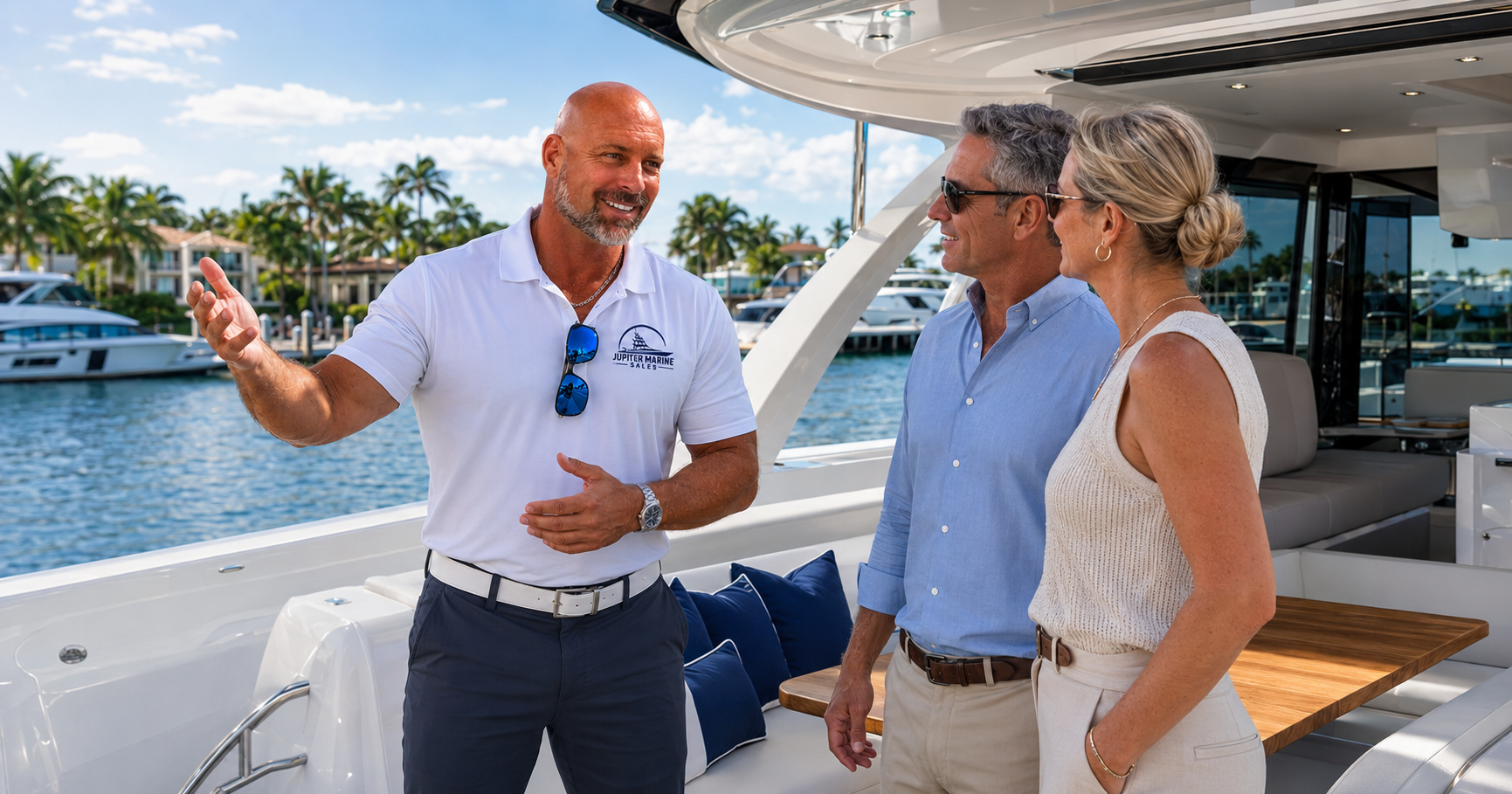
Darren Diaz guides prospective buyers through a professional visual yacht showing while protecting the seller’s vessel, privacy, and transaction process
A professional yacht showing is more than unlocking the boat and allowing a prospective buyer to walk aboard.
It is a carefully planned presentation designed to help a qualified buyer understand the vessel’s condition, layout, equipment, operation, and ownership value while protecting the seller’s time, privacy, property, and negotiating position.
The broker may need to coordinate with the owner, buyer, buyer’s broker, captain, crew, marina, service yard, security personnel, and other parties before the appointment can occur.
The yacht may also need to be cleaned, opened, ventilated, staged, and checked to ensure that the buyer sees it under the best reasonable conditions. However, brokers should not turn on onboard systems, start engines, or operate machinery during an ordinary showing. Those items are best evaluated during the formal survey and sea trial process by the appropriate professionals.
A poorly managed showing can create confusion, expose preventable deficiencies, waste the seller’s time, or cause an interested buyer to lose confidence.
A professional showing should make the yacht easy to understand, allow the buyer to ask meaningful questions, and provide an organized path toward an offer when the vessel is a good fit.
This guide explains how yacht brokers prepare for, conduct, secure, and follow up after professional yacht showings.
A professional yacht showing should include:
The broker should remain involved throughout the appointment.
The goal is not to pressure the buyer into making an immediate offer. It is to create a controlled environment in which the buyer can evaluate the yacht accurately and the broker can determine whether the prospect is prepared to move forward.
Photography, video, specifications, and advertising create the buyer’s initial interest.
The showing is where the digital presentation becomes a real-world experience.
The buyer will notice things that photographs may not fully communicate, including:
A professional showing helps the buyer connect the written listing with the physical yacht.
It also gives the broker an opportunity to explain how the vessel’s design, equipment, maintenance, and upgrades relate to the buyer’s intended use.
This stage works best when the buyer has already been properly screened. Our guide to how yacht brokers qualify buyers before a boat showing explains how brokers evaluate buyer identity, intent, budget, financing, vessel fit, timeline, and showing readiness before granting access.
A seller should not be expected to prepare the yacht for every person who submits an online inquiry.
Before scheduling an appointment, the broker should have enough information to determine that the showing is a reasonable use of the seller’s time and access.
Qualification may include:
Qualification does not mean that the buyer must promise to make an offer.
It means that the prospect has demonstrated a legitimate interest and reasonable ability to consider the yacht.
The showing should be scheduled for a specific date and time.
Before the appointment, confirm:
The buyer should know how to reach the broker if travel delays occur.
The broker should also confirm whether the appointment remains on schedule shortly before the showing. This is especially important when the owner, captain, crew, marina, or security staff must prepare access.
Unconfirmed appointments create unnecessary disruption.
The listing broker should establish a showing process with the seller before the first buyer appointment.
That process should address:
The seller’s instructions should be clear.
If the yacht is professionally crewed, the captain should understand the broker’s showing plan. Crew members may need to open the vessel, provide access to restricted areas, explain equipment visually, provide lighting if already available, or prepare machinery spaces. They should not turn on systems, start engines, or operate machinery for the buyer during an ordinary broker showing unless a separate, authorized inspection or sea-trial procedure is underway.
A brokerage agreement may describe the broker’s general authority, but showing access and practical procedures should still be discussed specifically. Sellers can review Understanding Yacht Brokerage Agreements for a detailed explanation of listing authority, seller responsibilities, marketing, access, inquiries, offers, and transaction coordination.
A yacht should be prepared as though a serious buyer is about to make a purchasing decision—because that may be exactly what happens.
Preparation should begin before the buyer reaches the marina.
Check:
Dock lines and fenders should be neat and secure.
Loose cleaning supplies, hoses, extension cords, tools, buckets, fishing equipment, and maintenance materials should be removed or organized.
The buyer’s first close view of the yacht should not be a dirty waterline, stained deck, loose canvas panel, or pile of equipment on the dock.
The interior should be:
Beds should be made. Counters should be clear. Cabinet doors should close correctly. Heads should be clean. Refrigerators should not contain spoiled food. Bilges and machinery spaces should not produce unexplained odors.
Strong air fresheners can create suspicion that the seller is attempting to hide mildew, sewage, fuel, smoke, or water-intrusion odors.
A clean yacht should smell neutral.
The broker may visually inspect the yacht before the buyer arrives, but should not turn on systems or engines as part of routine preparation. A system left running can drain batteries, create an unnoticed fault, or contribute to serious damage. In extreme cases, an unattended operating system, pump, or electrical component can contribute to flooding or sinking.
Remove or secure:
Buyers need reasonable access to evaluate the yacht, but that does not require exposing the seller’s private information.
A buyer cannot properly evaluate areas that are blocked by clutter or locked without explanation.
When appropriate, make accessible:
Access should remain controlled.
A buyer should not open every panel or begin disassembling equipment without permission. The broker, captain, crew member, surveyor, or qualified technician may be responsible for opening certain areas.
The broker may point out the location and visible condition of systems, but should not activate them for demonstration. Operational testing should be reserved for the survey and sea trial, when the appropriate professionals can evaluate the equipment under controlled conditions.
If an important compartment cannot be accessed during the appointment, the broker should explain why and describe when access can be arranged.
The broker should arrive prepared to answer practical questions.
Useful information may include:
The broker may also bring or provide digital access to:
Sensitive records should not be distributed without authorization.
A serious buyer may reasonably request additional information, but the broker should understand what may be shared, when it should be shared, and whether personal or account information must be removed.
The broker should arrive early enough to inspect the yacht before the appointment.
A final walkthrough may reveal:
Discovering these issues before the buyer arrives gives the broker time to correct them, explain them, or reschedule when necessary.
The broker should not allow the buyer to be the first person to discover that the yacht is unprepared.
The broker should not attempt to correct an electrical, mechanical, plumbing, bilge, or safety issue by turning on equipment or starting machinery. Those matters should be referred to the seller, captain, service provider, surveyor, or qualified technician.
The showing begins before the buyer boards.
The buyer notices:
The broker should greet the buyer professionally, make introductions, and briefly explain how the walkthrough will proceed.
A helpful introduction may cover:
The broker should not begin with a lengthy sales speech.
Get the buyer aboard, establish the plan, and allow the yacht to become the focus.
A professional showing should follow a clear route.
Jumping randomly among cabins, decks, storage compartments, and mechanical spaces makes the vessel difficult to understand.
The best sequence depends on the yacht.
A logical route may include:
A showing may proceed through:
A typical sequence may include:
The broker should help the buyer understand how the spaces connect and how the yacht would function during actual ownership.
The broker may identify engines, generators, electronics, pumps, air-conditioning equipment, and other systems, but should not operate them during the showing.
A knowledgeable broker does not conduct every showing with the same script.
The walkthrough should reflect the buyer’s priorities.
An offshore-fishing buyer may care most about:
A cruising buyer may focus on:
A family buyer may prioritize:
A buyer planning Bahamas trips may ask about:
The broker should connect the yacht’s features to the buyer’s intended use without forcing an unsuitable match.
Professional presentation does not mean describing every feature as exceptional.
The broker should be accurate about:
If the broker does not know the answer, the correct response is to verify the information.
Guessing about fuel capacity, service dates, engine specifications, construction, performance, warranty, damage history, or ownership documents can create problems later.
A broker may say:
Credibility is more valuable than an immediate but unreliable answer.
The article How to Write a Boat Listing That Actually Sells explains why accurate specifications, condition information, equipment details, service records, and disclosures matter throughout the selling process.
A professional showing should give appropriate attention to the equipment that materially affects the yacht’s value or usefulness.
Depending on the vessel, that may include:
Do not simply mention that equipment exists.
When authorized and practical, show:
The broker should not turn on, activate, start, cycle, or operate the equipment during the showing. A visual explanation is appropriate; functional testing belongs in the formal due-diligence process.
The buyer should leave with a clear understanding of which features distinguish the yacht from competing vessels.
Jupiter Marine Sales brokers do not turn on onboard systems, start engines or generators, or operate machinery during an ordinary yacht showing.
A showing is a visual walkthrough and buyer-orientation appointment. It is not a systems test, engine demonstration, survey, or sea trial.
The broker may identify equipment, explain its purpose, point out its location, review available records, and describe how testing will be handled later. The broker should not activate or operate:
This policy protects the vessel, the seller, the buyer, and the brokerage.
A system left running after a showing can drain the batteries. A pump, seacock, electrical component, or other system that is left on or operating without supervision can create serious damage. In the worst case, an unattended system or unnoticed fault can contribute to flooding and sink the boat.
Brokers may not know the condition of every battery, breaker, valve, seacock, pump, hose, cooling system, fuel system, electrical connection, or safety device. Turning on equipment without a controlled testing plan can create unnecessary liability and may damage the yacht.
Operational testing should be performed during the formal survey and sea-trial process by the appropriate surveyor, mechanic, captain, technician, or other qualified professional, under the terms of the purchase agreement and with the required permissions, insurance, and safety procedures in place.
If a buyer asks to start an engine or test a system during the showing, the broker should explain:
“Our showings are visual walkthroughs. We do not turn on systems or start engines during a showing. Those items are tested during the survey and sea trial by the appropriate professionals.”
If the buyer requires operational testing before deciding whether to proceed, the broker should coordinate with the seller and arrange an appropriate inspection or sea trial rather than making an informal exception.
Starting an engine or generator is not part of a standard dockside showing.
The broker should not attempt to determine whether startup is safe by checking:
Those matters belong to the qualified operator and formal testing process.
For gasoline-powered boats and generators, blowers and ventilation are essential. However, the presence of a safety checklist does not authorize a broker to start machinery during a showing.
At Jupiter Marine Sales, we use a simple reminder:
“If they don’t blow, you don’t go!”
For a broker showing, the rule is even simpler: do not start the machinery.
A professional broker explains the yacht without dominating every moment.
The buyer should have enough time to:
Constant talking can prevent the buyer from forming a personal impression.
The broker should remain available, attentive, and close enough to protect the vessel without following the buyer so aggressively that the appointment becomes uncomfortable.
The best showings create room for both education and observation.
A showing is also a qualification and discovery opportunity.
The broker should listen for comments about:
The buyer’s questions often reveal whether the yacht is a serious candidate.
General compliments are pleasant but may provide little information.
More meaningful signs of interest can include questions about:
The broker should not mistake politeness for purchase intent, but should also avoid pressuring a thoughtful buyer who needs time to evaluate the vessel.
In many cases, a buyer may communicate more openly when the seller is not present.
A seller naturally has an emotional and financial connection to the yacht. Buyer comments about condition, price, layout, or needed repairs can feel unnecessarily critical.
The listing broker can often manage these conversations more productively by:
There are situations in which the seller’s presence may be useful or necessary, particularly when the seller has unique technical knowledge or controls access.
Even then, the broker should lead the appointment.
The seller should avoid:
The seller’s personal knowledge can be valuable, but negotiation and operational testing should remain organized through the broker and the formal transaction process.
Captains and crew can materially improve a showing when their roles are established beforehand.
They may help:
They should not turn on systems, start engines, or operate machinery for the buyer during an ordinary showing.
Operational demonstrations should be scheduled separately as part of an authorized survey, inspection, or sea trial with the appropriate professionals present.
However, crew members should understand what information they are authorized to discuss.
Unplanned comments about maintenance problems, owner disputes, schedule pressure, compensation, charter activity, previous offers, or seller motivation can affect the transaction.
The listing broker should remain responsible for the overall communication and seller representation.
A qualified buyer may attend with another yacht broker.
Professional cooperation can create a stronger transaction when responsibilities are clear.
The listing broker should:
An exclusive listing can still allow qualified buyer brokers to introduce clients. The guide to Exclusive vs. Open Yacht Listings explains how broker cooperation can expand exposure while keeping one brokerage accountable for the seller’s campaign.
A showing is an initial buyer evaluation.
It is not a substitute for:
During a showing, the buyer may reasonably inspect visible areas and ask questions.
The buyer should not begin removing equipment, disconnecting wiring, opening sealed components, taking fluid samples, or performing invasive testing without authorization.
The broker should not activate systems or start engines to assist with an informal inspection.
Formal due diligence should be handled according to the purchase contract and coordinated with appropriate professionals.
A buyer may ask to start the engines or take the yacht for a ride during the initial showing.
The seller is not required to provide a sea trial merely because a prospect has expressed interest.
A sea trial commonly occurs after:
The exact process depends on the contract and transaction.
A dockside showing helps the buyer decide whether the yacht is worth pursuing. A sea trial evaluates operation and performance under the applicable agreement.
Our Boat Survey vs. Sea Trial guide explains the different purposes of these transaction stages.
A serious buyer may be unable to visit the yacht immediately.
A live video showing can help an out-of-state or international prospect determine whether to travel, appoint a representative, or prepare an offer.
A professional remote showing should:
The broker should not turn on systems or start engines during a remote showing. If the buyer wants operational testing, the broker should explain that it must be arranged separately through the survey and sea-trial process.
The broker may also record additional footage requested by the buyer.
A professionally prepared listing video can reduce the need for preliminary appointments. The Professional Yacht Broker’s Guide to Creating a Boat Video That Attracts Serious Buyers explains how video helps buyers understand layout, equipment, condition, and suitability before traveling.
A video showing does not replace an in-person inspection, survey, engine evaluation, or sea trial.
Weather can significantly affect a yacht showing.
Heavy rain, high winds, extreme heat, poor lighting, rough dock conditions, or nearby construction can make the yacht difficult or unsafe to evaluate.
The broker should consider:
Rescheduling may be better than forcing a showing under conditions that create safety concerns or a poor impression.
Out-of-town buyers may have limited flexibility, so the broker should communicate weather risks early and prepare alternative options such as an interior inspection followed by a second exterior visit.
The broker should maintain reasonable control throughout the appointment.
Security practices may include:
An unverified visitor should never be left alone aboard the yacht.
The broker should also document significant issues discovered during or after the showing, including damaged equipment, missing property, unsecured hatches, alarms, or unauthorized access.
The broker’s work continues after the buyer leaves.
Prompt follow-up should determine:
The broker should also:
The broker should distinguish between isolated comments and repeated market patterns.
One buyer may dislike a particular layout. Several qualified buyers may identify the same concern about price, condition, machinery, presentation, or documentation.
Repeated feedback can provide valuable evidence for adjusting the selling strategy.
Showing feedback should be useful, accurate, and appropriately limited.
The seller generally needs to know whether the buyer liked the yacht, whether the yacht remains under consideration, whether the buyer requested additional information, and whether there are practical issues that need attention.
The seller does not necessarily need a detailed account of every comment, question, hesitation, or personal opinion expressed during the showing. Too much information can cause some sellers to become overinvolved, overreact to minor remarks, or attempt to manage every aspect of the buyer’s decision.
A concise report may include:
In many cases, a positive and accurate update is sufficient:
“They liked the boat and are still looking. I’ll stay in touch and let you know if they want additional information or decide to make an offer.”
If the yacht showed well and there were no material issues, the broker should avoid overanalyzing ordinary buyer comments. A buyer may need time to compare vessels, consult a spouse or adviser, arrange financing, or consider the next step.
The broker should report issues that affect the yacht’s presentation, safety, condition, or marketability. Examples may include:
The broker should not routinely pass along every negative comment or speculative objection unless it is material, repeated, or useful in deciding whether the yacht needs attention.
The seller should also be told promptly if the buyer makes an offer or clearly requests to move into the survey, sea-trial, or contract stage. Until then, the broker should keep the seller informed without creating unnecessary pressure or inviting the seller to interfere with the buyer’s process.
A concise feedback report protects the seller’s negotiating position, keeps expectations realistic, and allows the broker to manage the relationship professionally.
A rushed showing can create a negative impression that is difficult to reverse.
The seller, captain, and crew may spend hours preparing for someone who has no realistic ability or intention to purchase.
The broker loses the opportunity to identify access, cleanliness, equipment, or safety problems first.
Dark spaces, heat, humidity, and odors can make a maintained yacht feel neglected.
Clutter makes spaces appear smaller and can expose the seller’s private information.
The buyer needs time to experience the yacht and think.
Inaccurate statements can damage confidence and create later disputes.
Serious buyers frequently evaluate the engine room, bilges, wiring, plumbing, batteries, generator, and mechanical access carefully.
Improper operation can damage equipment or create safety and liability concerns. During a standard showing, brokers should not operate equipment at all.
A system left on can drain batteries, create an unnoticed fault, or contribute to flooding and sinking. Operational testing belongs in the survey and sea trial.
A dockside appointment should not become an unauthorized demonstration cruise or machinery test.
The seller’s property, privacy, and security must remain protected.
Passing along every minor comment can cause the seller to overreact, become overbearing, or interfere with the buyer’s decision-making process. Feedback should be concise, positive when appropriate, and focused on material issues or clear next steps.
Buyer interest can disappear when questions, records, and next steps are not handled promptly.
Repeated concerns from qualified buyers may reveal a real market problem.
A boat can receive extensive advertising and still fail when presentation, price, condition, access, follow-up, or seller expectations are weak. Why Boats Don’t Sell: The Top 25 Reasons Boat Listings Fail explains how these factors work together.
Yes.
The buyer arrives with expectations created by the asking price.
A yacht priced near the top of its competitive range should support that position through:
If the yacht is priced substantially above comparable vessels, the buyer may judge every cosmetic defect, service need, outdated system, and worn surface more critically.
A realistic asking price does not eliminate buyer objections, but it helps the yacht compete fairly with other available inventory.
Private sellers can review Why Overpricing Hurts a Boat Sale for an explanation of how unrealistic pricing reduces buyer interest, increases days on market, and weakens negotiating leverage.
Jupiter Marine Sales treats every yacht showing as an important stage in the professional selling process.
Our goal is to create a presentation that is organized, accurate, secure, and useful to the buyer while protecting the seller’s instructions and negotiating position.
Our brokers conduct visual showings and do not turn on onboard systems, start engines or generators, or operate machinery during an ordinary appointment. These items are best tested during the formal survey and sea trial by the appropriate professionals. This policy helps protect the vessel from battery drain, equipment damage, flooding, sinking, and unnecessary liability.
We also believe seller communication should be professional and appropriately measured. After a showing, we provide the seller with the information needed to understand whether the buyer liked the yacht, remains interested, needs additional information, or identified a practical issue that should be addressed. We do not overwhelm sellers with every minor comment or speculative objection. When the yacht is clean, well presented, and shows properly, the most useful update is often that the buyer liked the boat and is still considering it. If the buyer is ready to make an offer, we move promptly into the offer process.
Depending on the yacht, our showing process may include:
A professional showing works together with realistic pricing, accurate listing information, quality photography, detailed video, premium advertising, broker relationships, and responsive follow-up.
If you are considering selling a boat or yacht, contact Jupiter Marine Sales to request a confidential market evaluation and professional listing consultation.
Buyers can browse Jupiter Marine Sales featured boats or search the broader Florida Yacht Trader MLS.
The appropriate length depends on the yacht. A smaller boat may require 30 to 60 minutes, while a larger yacht with several decks, machinery spaces, crew areas, and complex systems may require considerably longer. The appointment should be thorough without becoming disorganized or repetitive.
Yes. The yacht should be inspected and prepared before each appointment. Weather, crew activity, maintenance, dock conditions, and normal use can change its presentation between showings.
No. Jupiter Marine Sales brokers do not start engines or generators during an ordinary showing. Engine startup and operational testing belong in the formal survey and sea trial process, where the appropriate professionals can evaluate the machinery under controlled conditions.
No. Brokers should not turn on air conditioning, electronics, pumps, refrigeration, appliances, windlasses, thrusters, stabilizers, battery chargers, inverters, or other onboard systems during a standard showing. A system left running can drain batteries or create an unnoticed condition that may damage the vessel. Systems should be tested during the survey and sea trial.
A broker may not know the condition of the batteries, breakers, valves, seacocks, pumps, hoses, wiring, cooling systems, or other components. Turning on a system without a controlled testing plan can cause damage, drain the batteries, create flooding risks, or increase liability. Operational testing should be performed by the appropriate professionals.
Not always. Buyers often speak more openly when the seller is absent. If the seller attends, the listing broker should lead the appointment and manage questions, disclosures, feedback, and negotiation.
That depends on the seller’s instructions, yacht location, privacy concerns, and brokerage policy. The broker should establish the rule before or at the beginning of the appointment.
Usually, reasonable visual access can be provided when the area is safe and authorized. The buyer should not perform invasive testing, remove equipment, or start machinery during an ordinary showing.
No. A showing helps the buyer evaluate layout, visible condition, features, equipment, and general suitability. A sea trial evaluates operation and performance and commonly occurs after a written agreement and deposit.
A buyer may request one, but sellers commonly require an accepted purchase agreement and deposit before allowing the time, access, haul-out, testing, and expense involved in a formal survey. The contract should establish the procedure.
The broker should not attempt to operate the system to diagnose or demonstrate the problem. The broker should not conceal or misrepresent the issue. Document the concern, notify the seller, and explain whether it will be repaired, evaluated, or disclosed. A qualified technician or surveyor can test the system during the appropriate due-diligence stage.
Necessary equipment may remain, but unnecessary personal belongings, valuables, documents, medications, firearms, and sensitive information should be removed or secured.
The broker should consider the seller’s instructions, marina security, vessel size, safety, and privacy before allowing additional access. It may be appropriate to verify the attendees or reschedule.
The broker should follow up promptly, keep the seller’s update concise, and focus on whether the buyer liked the yacht, remains interested, needs additional information, or identified a material issue requiring attention. Minor comments and speculative objections do not need to be passed along unless they are repeated or useful in improving the yacht’s presentation.
The broker should explain the offer process, identify the proposed price and terms, discuss the deposit, survey, sea trial, financing, included equipment, closing schedule, and other contingencies, and prepare the appropriate written agreement.
A strong showing cannot change the yacht’s underlying market value, but it can help buyers recognize its condition, equipment, maintenance, and advantages. Poor preparation can weaken buyer confidence and negotiating leverage.
A professional broker can qualify buyers, coordinate access, prepare the presentation, explain the vessel, protect the seller’s property and information, manage buyer brokers, collect appropriate feedback, organize offers, and guide the transaction through survey, sea trial, documentation, and closing.
This article provides general educational information and is not legal, safety, mechanical, insurance, financial, or contractual advice. Showing procedures, brokerage obligations, vessel-access requirements, operating practices, and transaction customs vary. Consult qualified professionals regarding the yacht and circumstances involved.

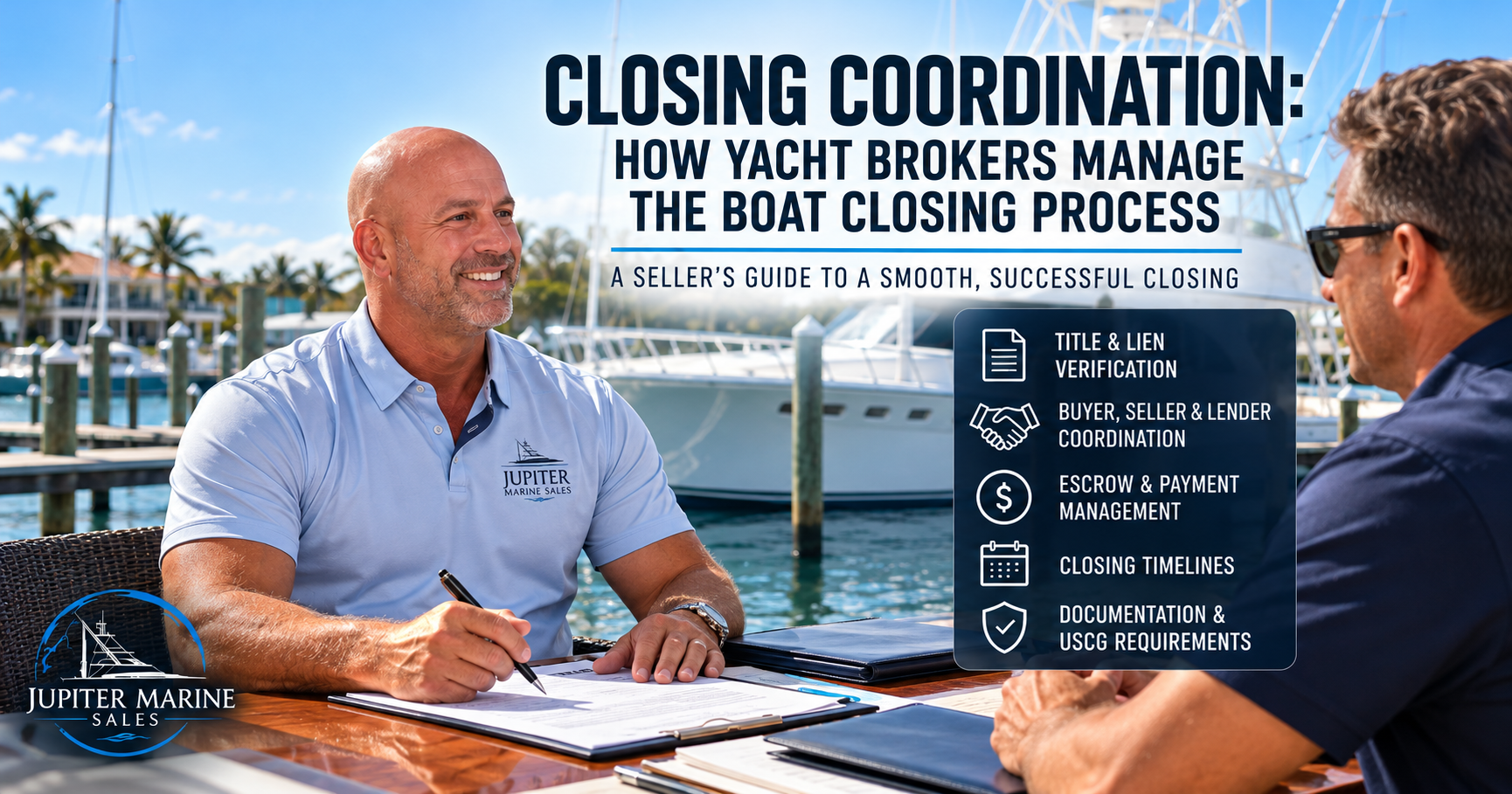
Jupiter Marine Sales | Professional Boat Selling Strategy — Article #13
A successful sea trial and survey are major milestones in selling a boat, but they do not mean the transaction is complete. Between a buyer's final acceptance and the actual closing, several importa

Getting a boat under contract is an important milestone in the selling process, but it is not the finish line.
After the seller accepts an offer and the purchase agreement is executed, the transaction typically moves into the buyer’s inspection and due-diligence period. For most brokerage t

A marine survey is one of the most important stages of buying or selling a boat—but what happens after the survey can be just as important as the inspection itself.
Survey day is often where a straightforward boat transaction suddenly becomes complicated.
A surveyor m
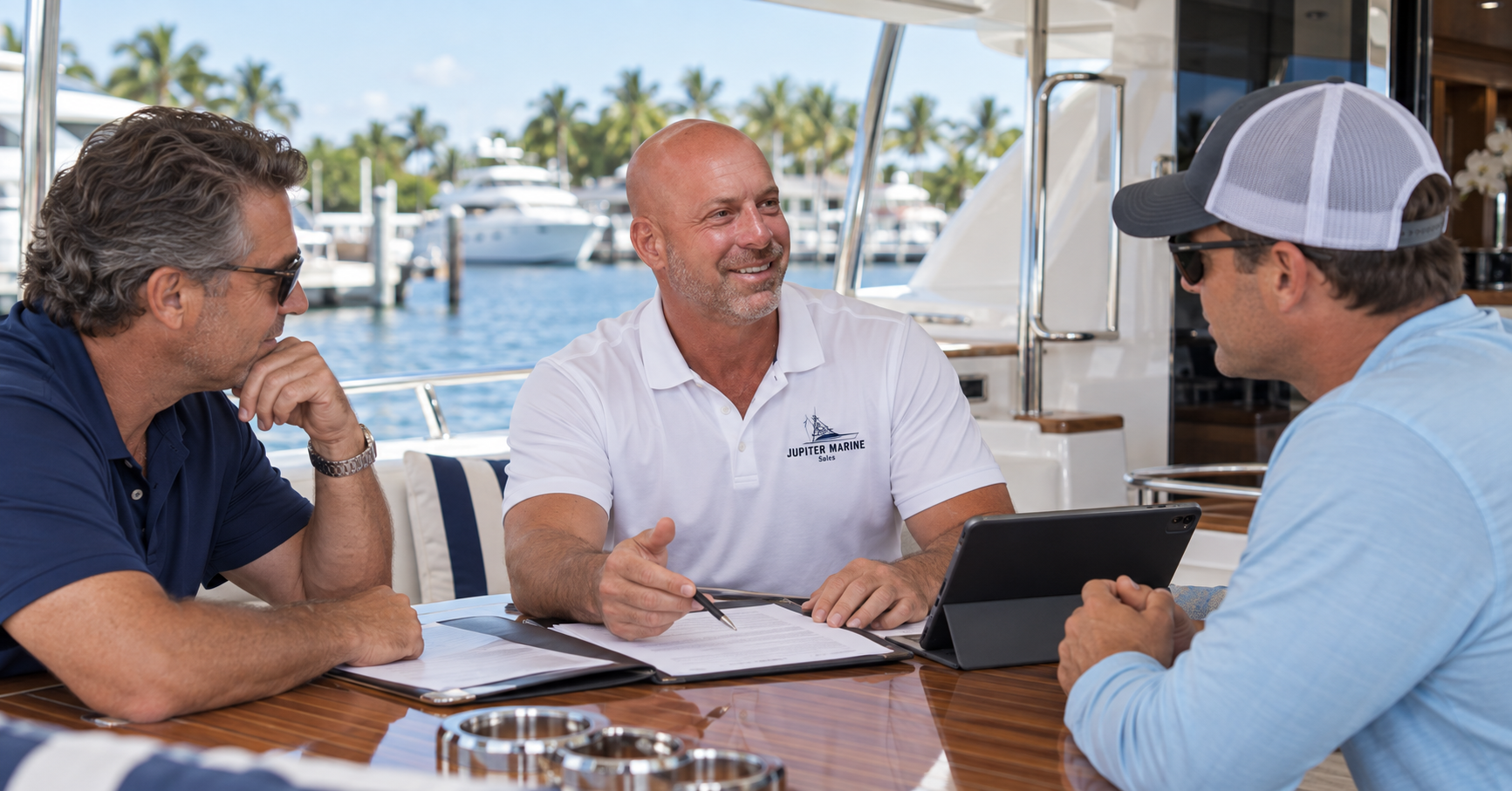
Receiving an offer is an important milestone in the sale of a boat or yacht—but it is not the end of the process.
It is the beginning of the negotiation.
The buyer may begin below the asking price. The seller may want to counter. The parties may disagree about the deposit, survey peri